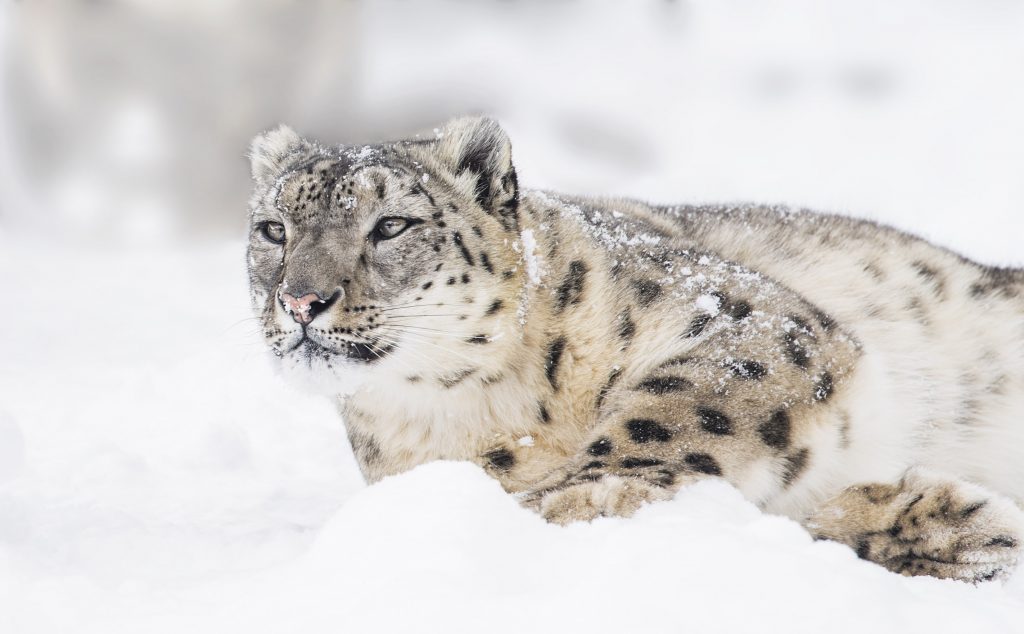
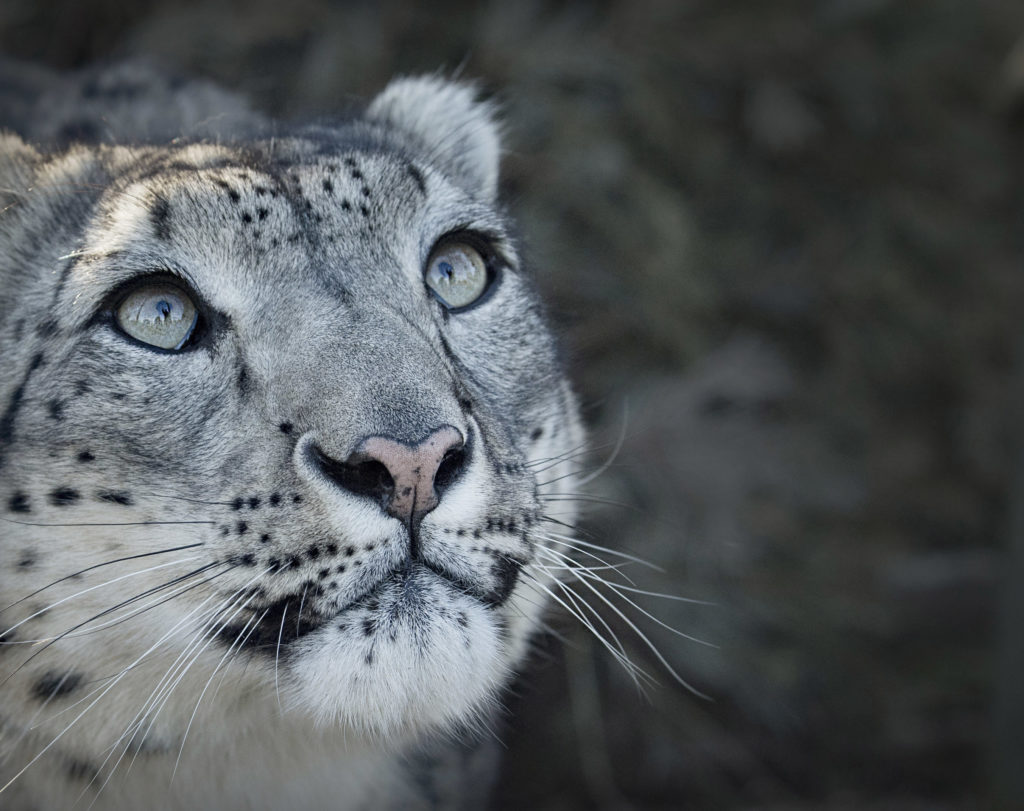
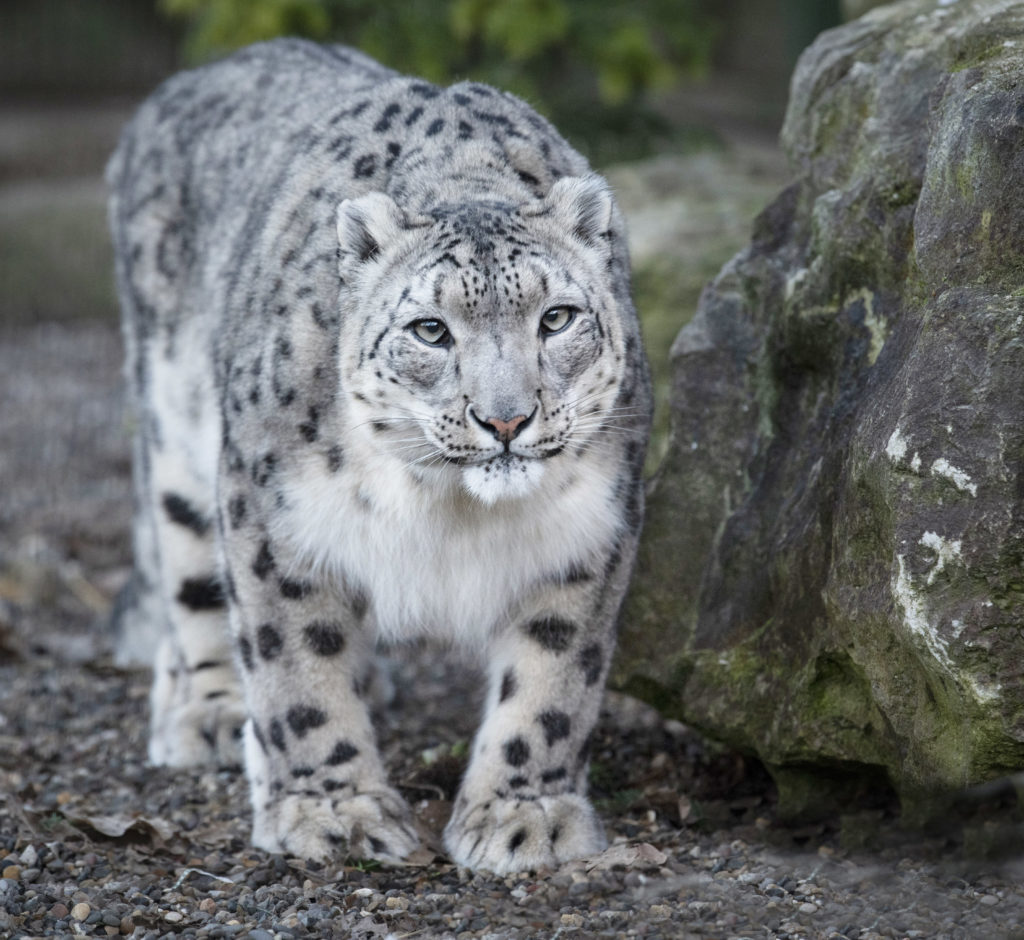
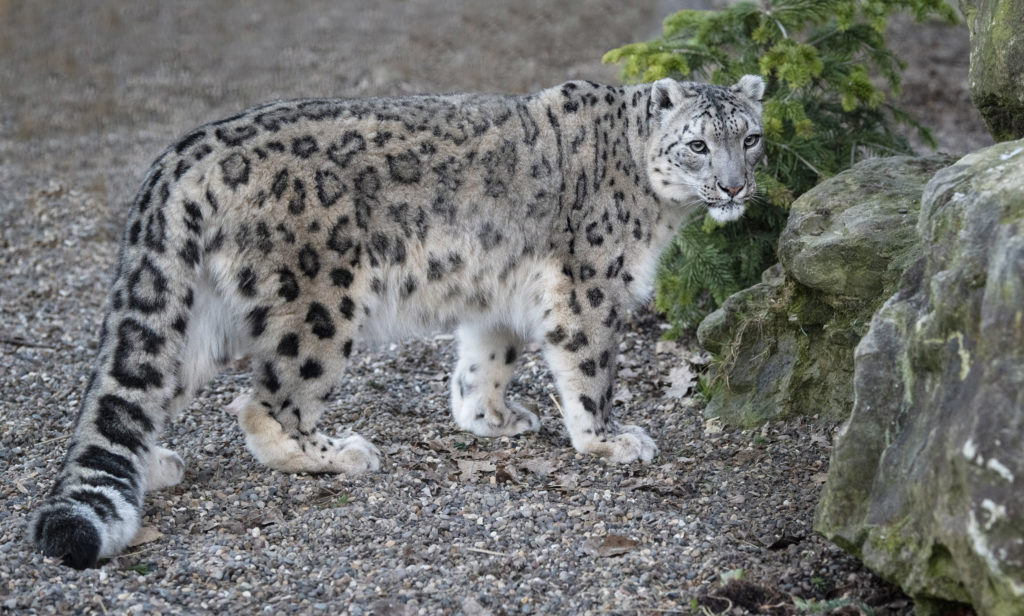
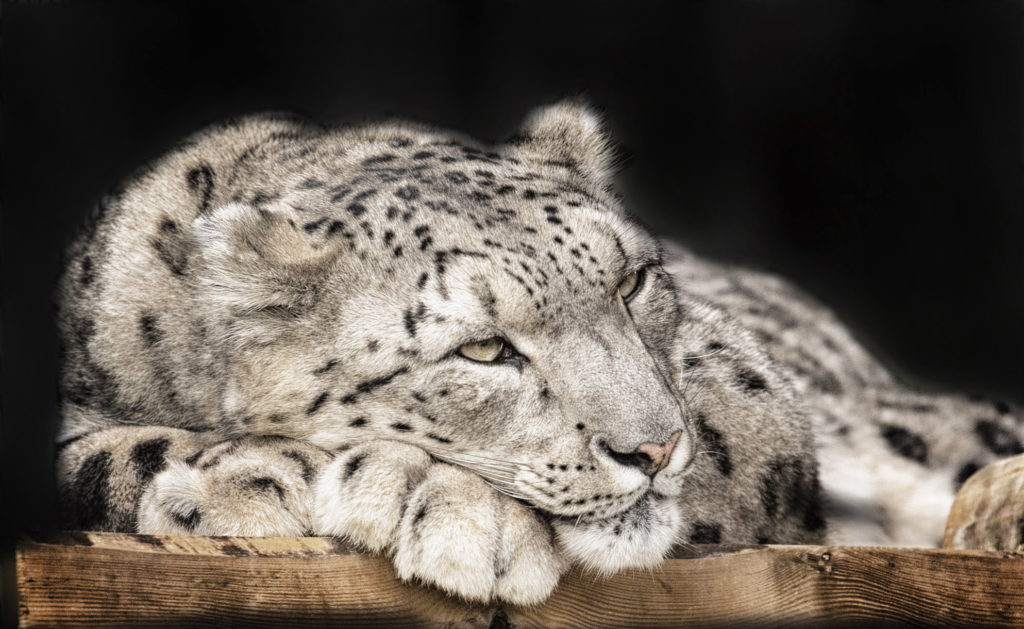
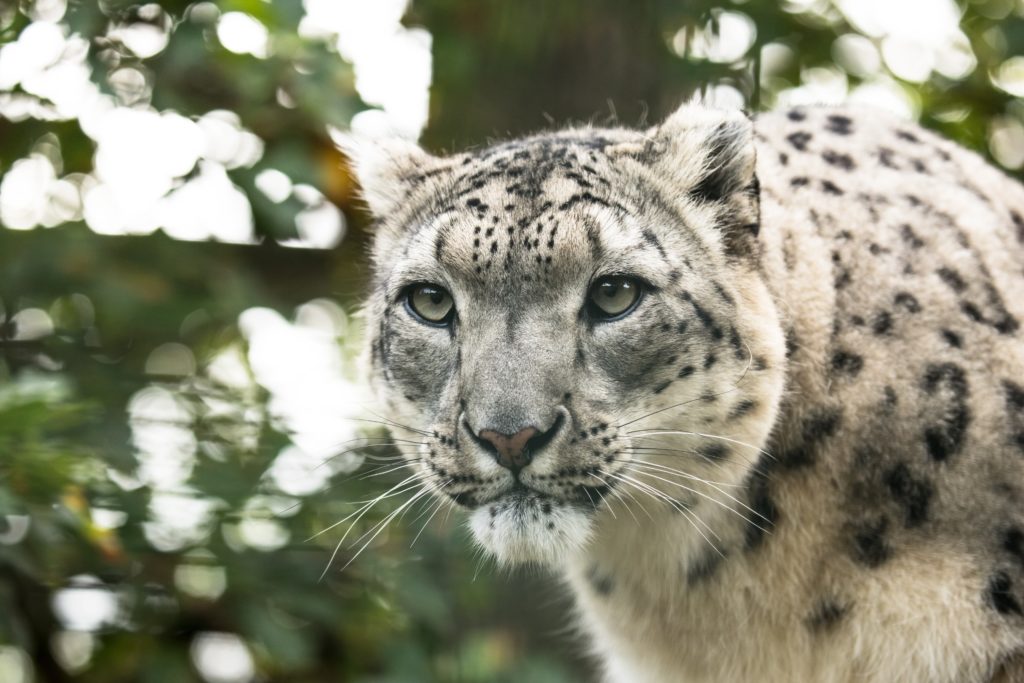
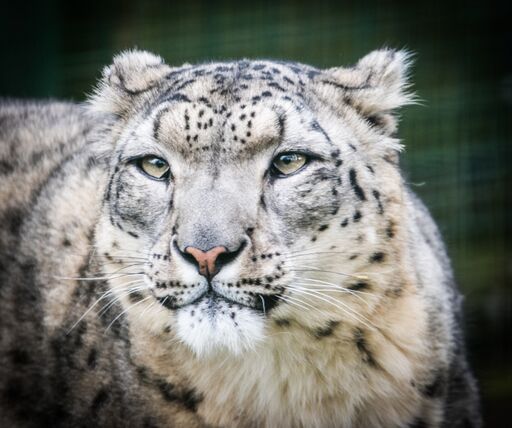
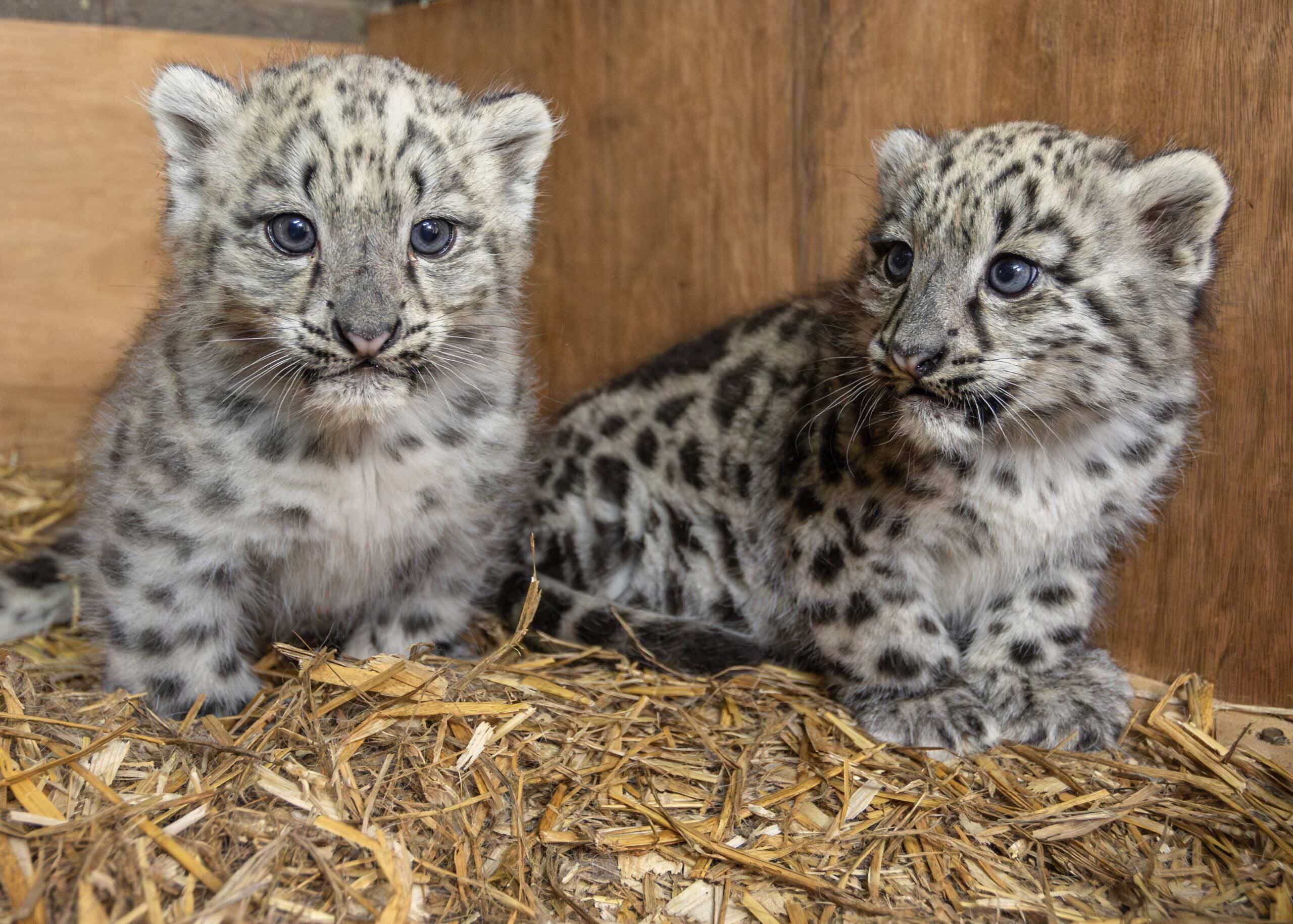
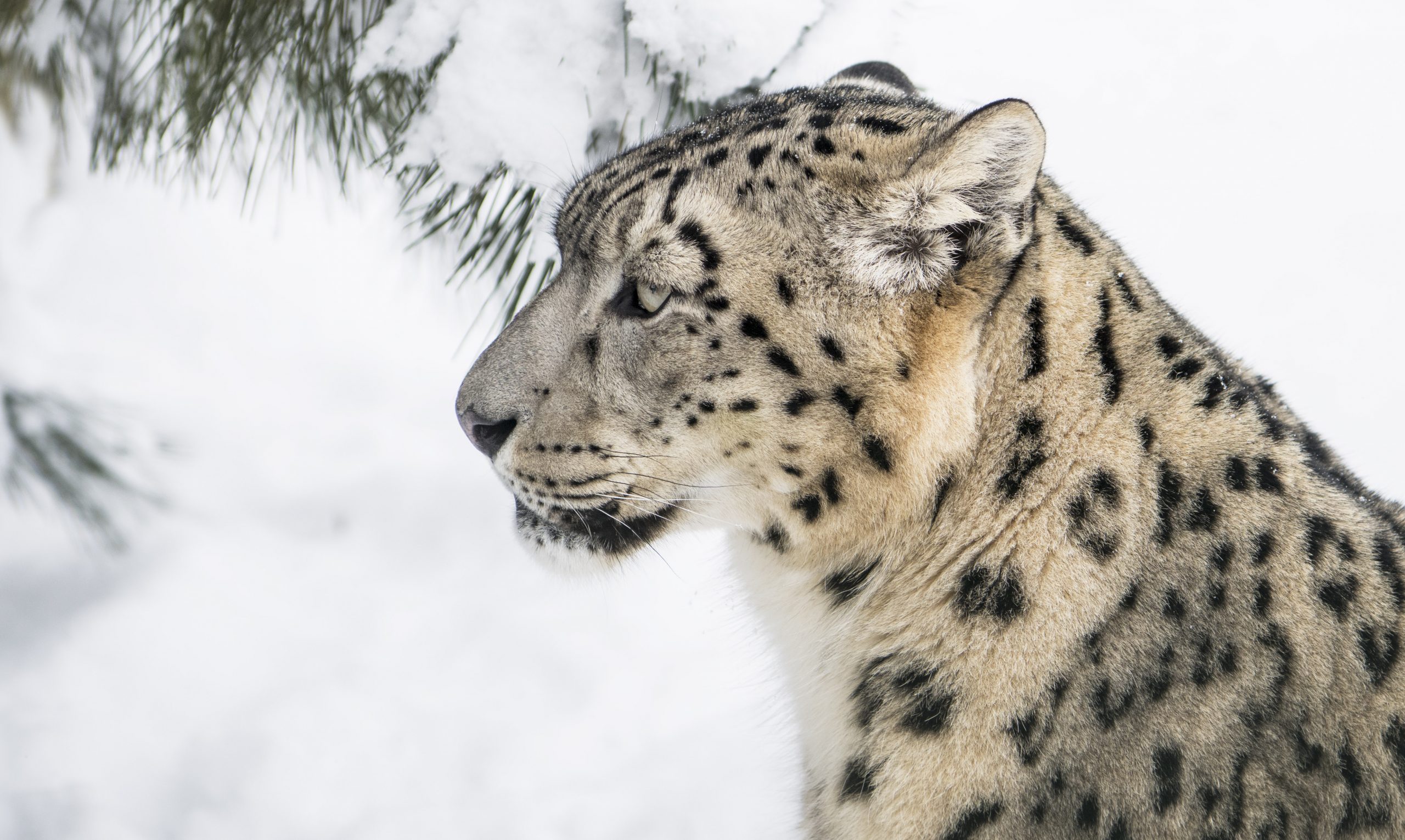
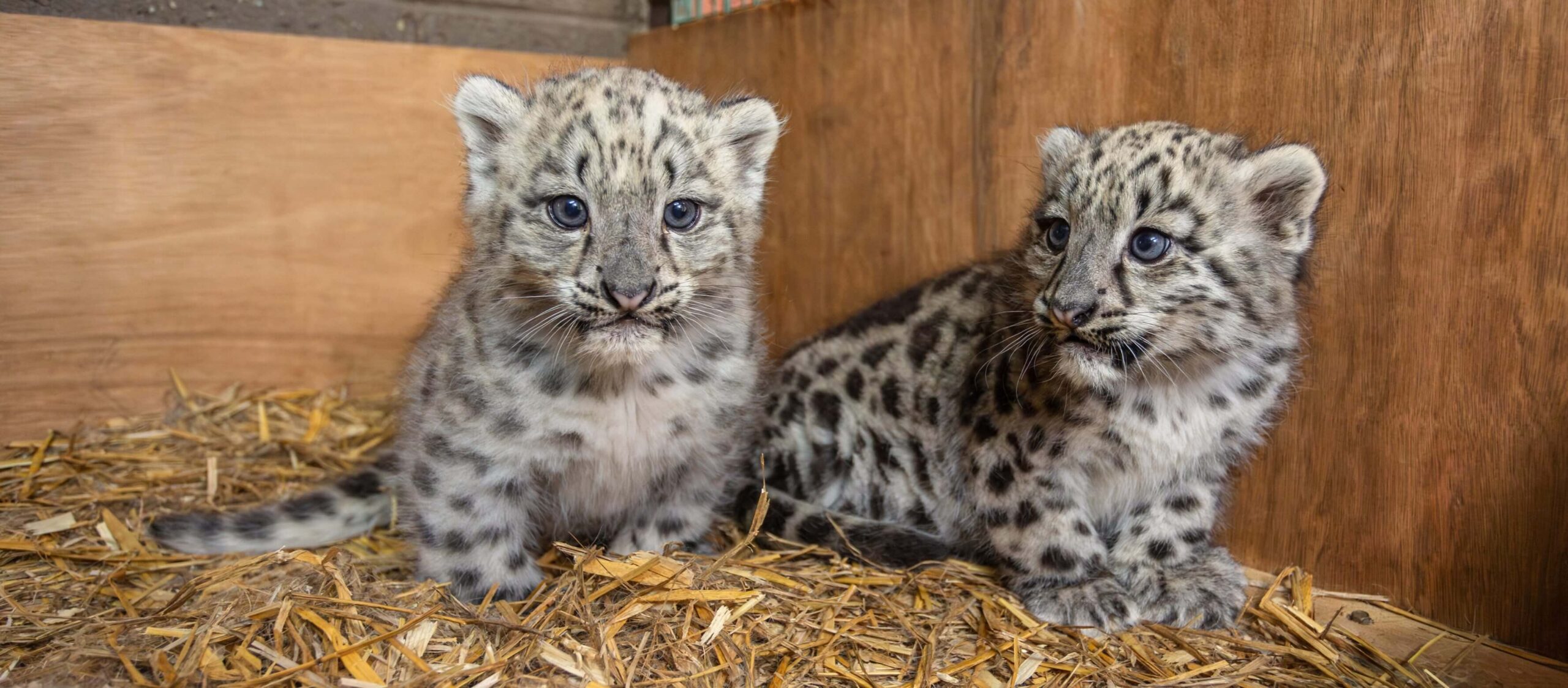
Snow leopards have an extra long, dense fur and with small ears, stocky build and a long tail that doubles up as a scarf when sleeping, Snow leopards are experts at retaining body heat, they also have large wide paws for walking steadily in snow.
Dappled shades of grey, yellow and creamish white colours gives them the perfect disguise for the natural habitat’s rocky terrain. As they move across the mountainous peaks and valleys of the Himalayas and surrounding foothills they are almost invisible to the human eye – the ghost of the mountains.
With a global population estimated at less than 2,500 mature breeding individuals, Snow leopards are listed as Vulnerable on the International Union for Conservation of Nature’s Red List of Threatened Species.
The Snow leopard typically lives at elevations of around 3,000-4,500m in arid and semi-arid shrub land and grassland. In Russia and parts of the Tian Shan in China it lives in open coniferous forest. Generally, however, it avoids dense forest, preferring steep terrain broken by cliffs, ridges, gullies and rocky outcrops.
Snow leopards can kill prey up to three times their own weight, and must kill a large animal about once every fortnight to survive. They hunt ibex, deer, boars, marmots and other small rodents, sometimes turning to domestic livestock when wild prey is scarce. Across its range, the Snow leopard is hunted for its highly-prized pelt and bones. Despite its protection under the Convention on International Trade in Endangered Species (CITES).
Snow leopards are persecuted because they sometimes preys on domestic livestock. This is partly due to a declining prey base, which has been over-hunted by herders under the misperception that the prey species compete with domestic livestock for forage. Occasionally this leads to the retaliatory killing of Snow leopards by herders protecting their livelihoods. As grazing pressure intensifies from an increasing number of domestic livestock, Snow leopard-human conflict is an ever increasing threat to the Snow leopard’s survival.