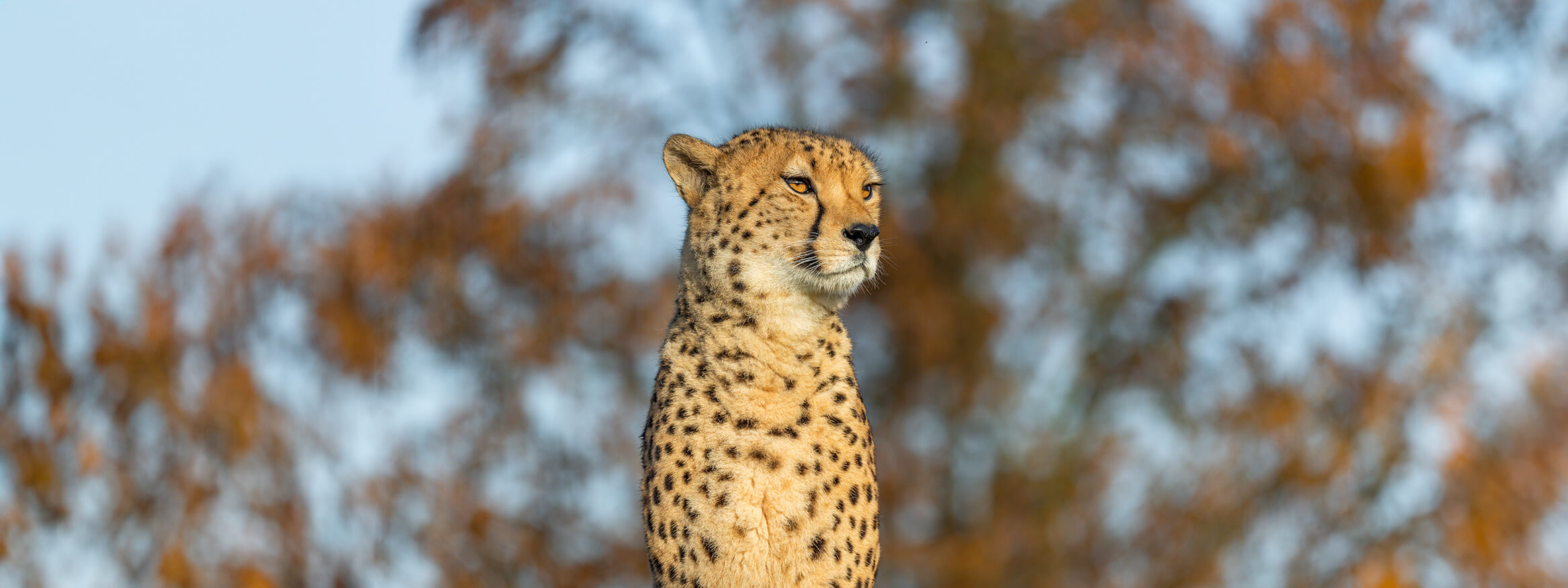
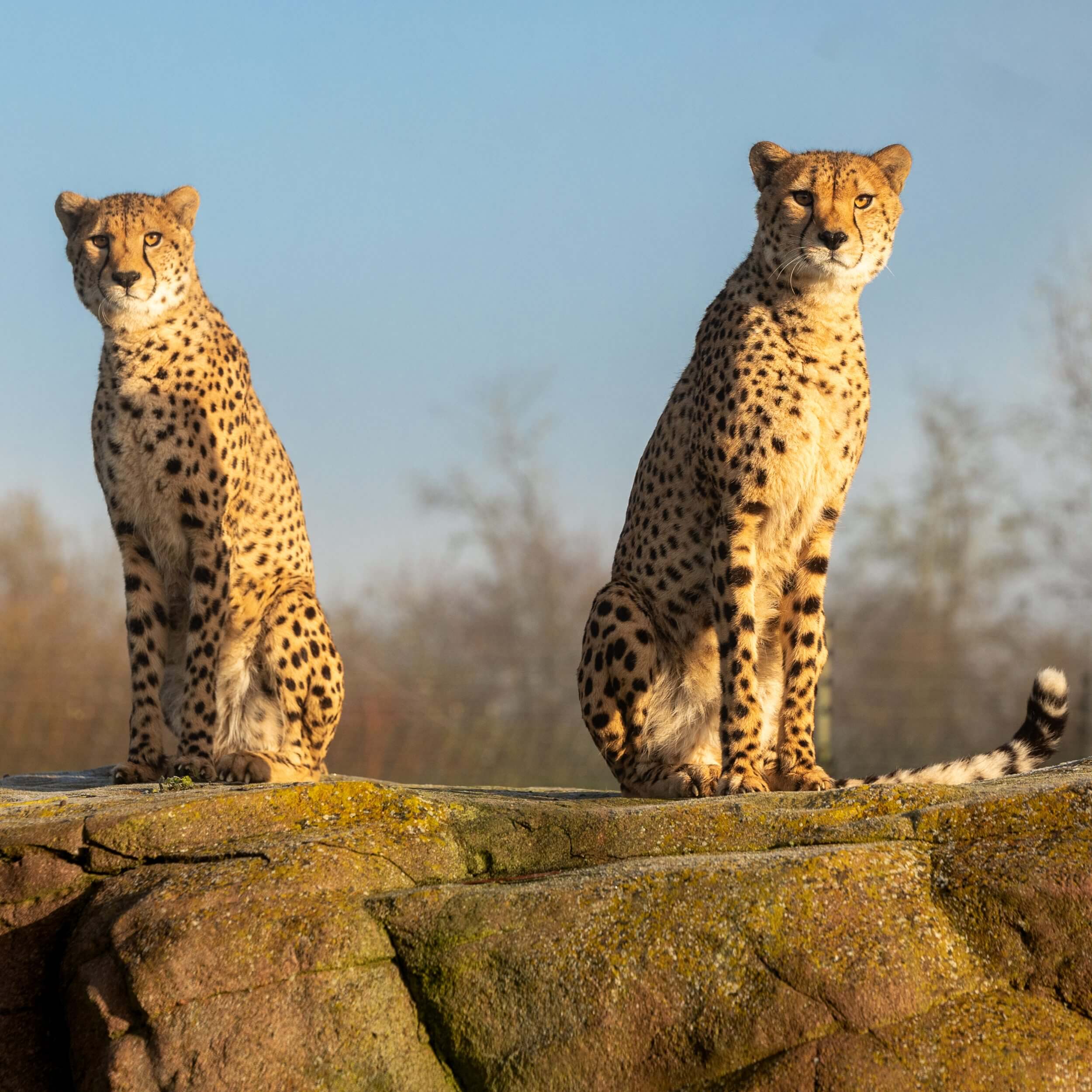
The cheetah is the planet’s fastest land animal, capable of reaching speeds of up to 68mph with a stride of 7 metres. However, it is also Africa’s most endangered wild cat too. There are estimated to be only 7,000 cheetahs left in the wild today.
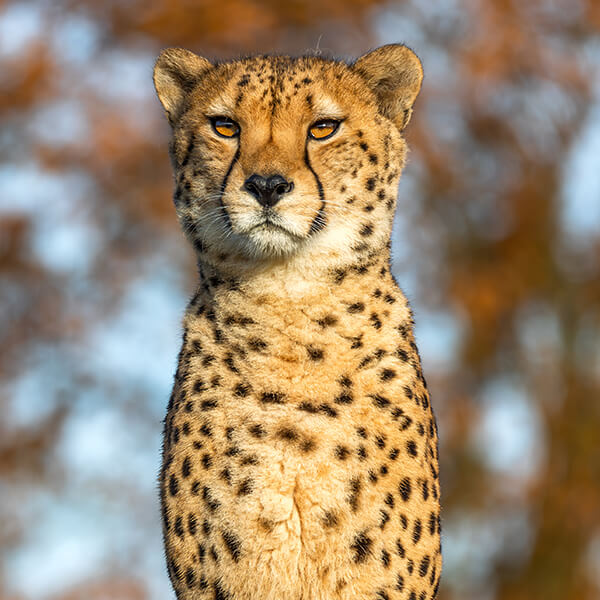
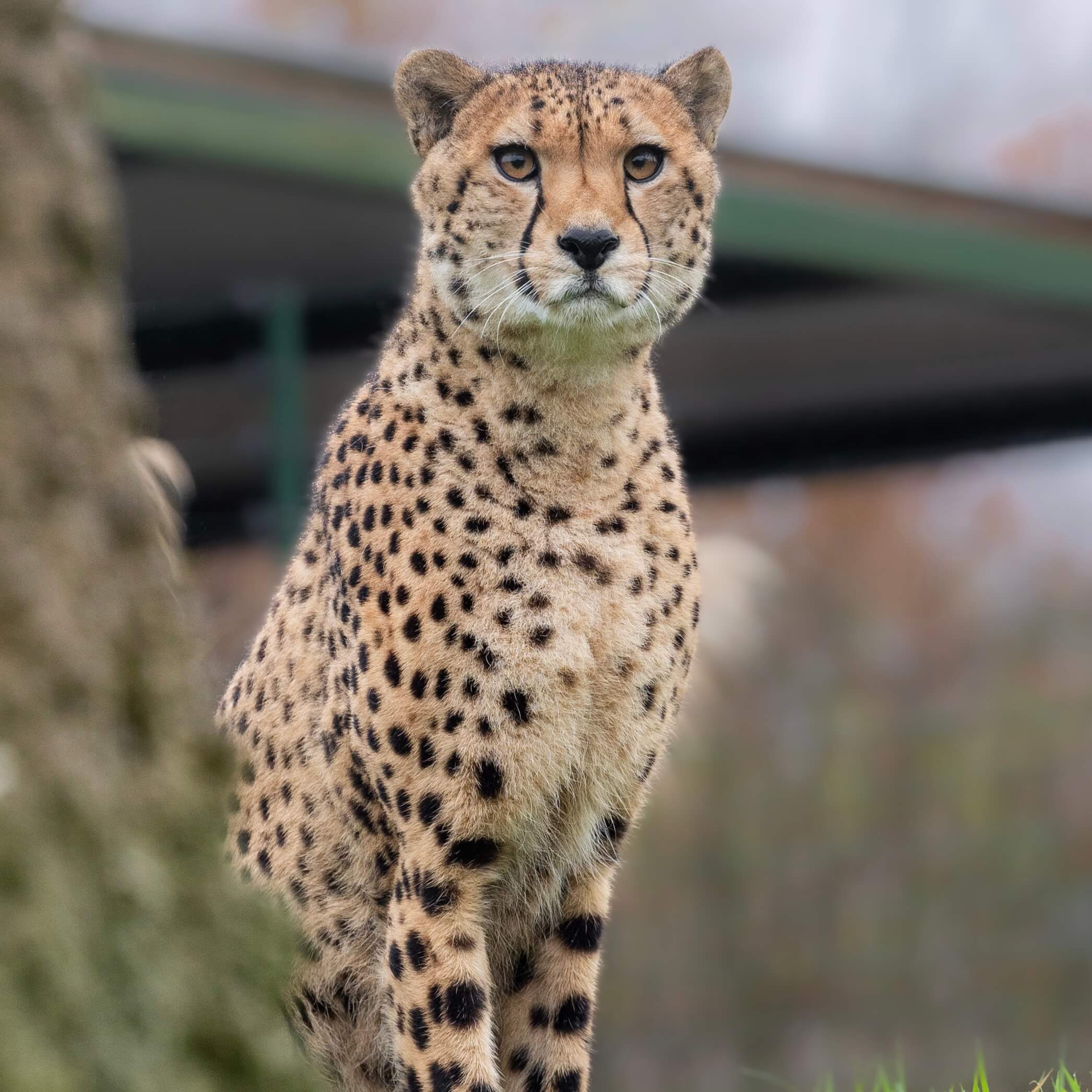
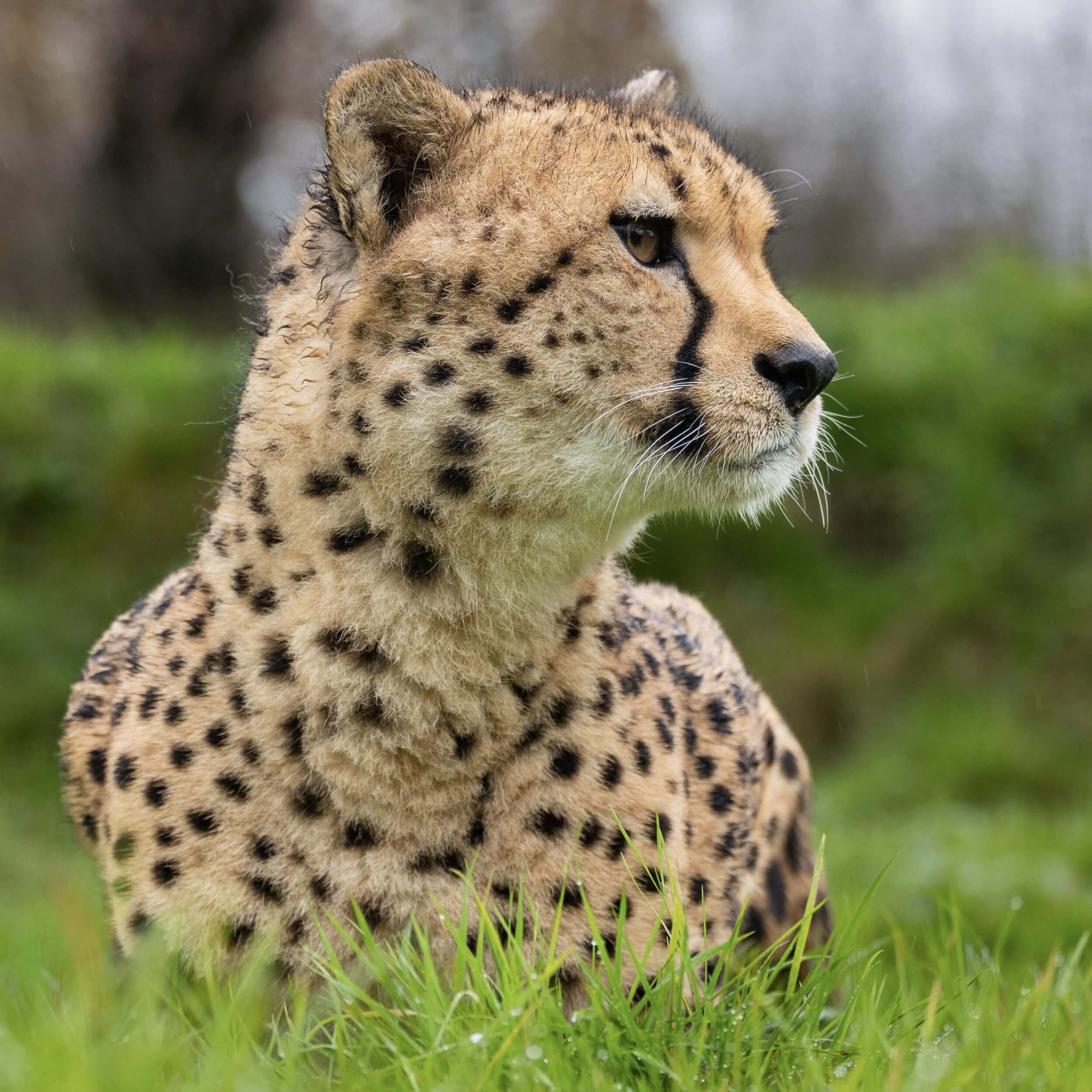
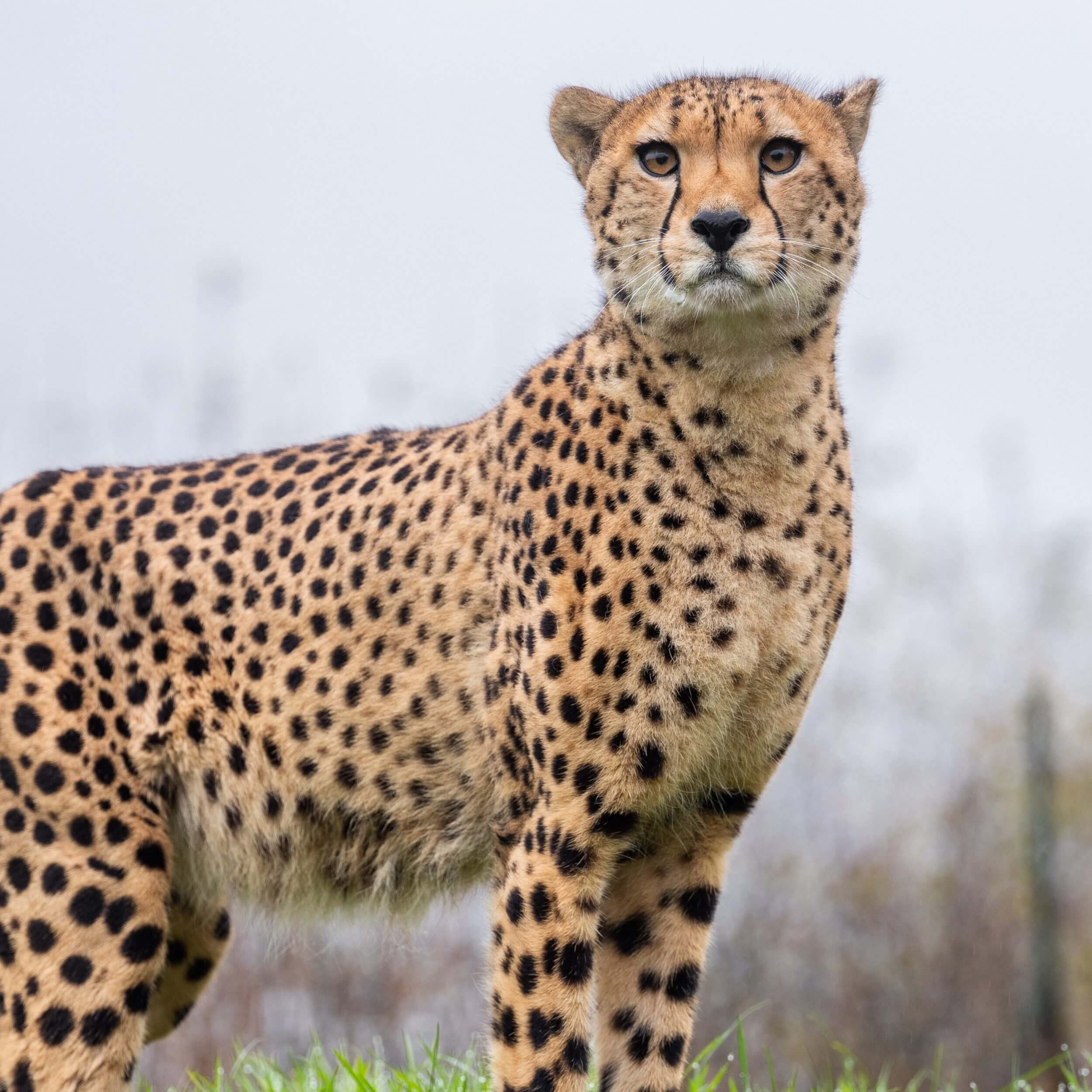
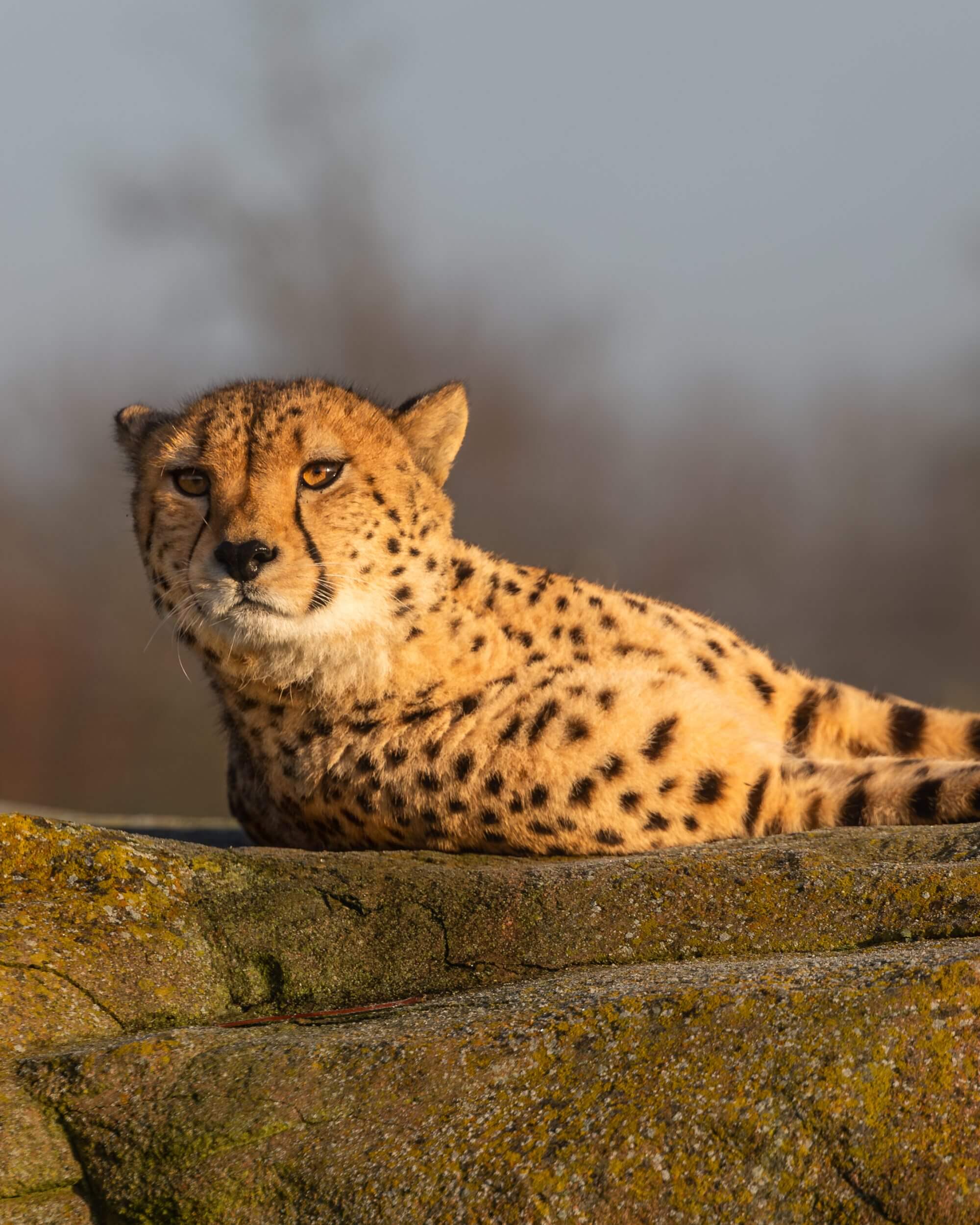
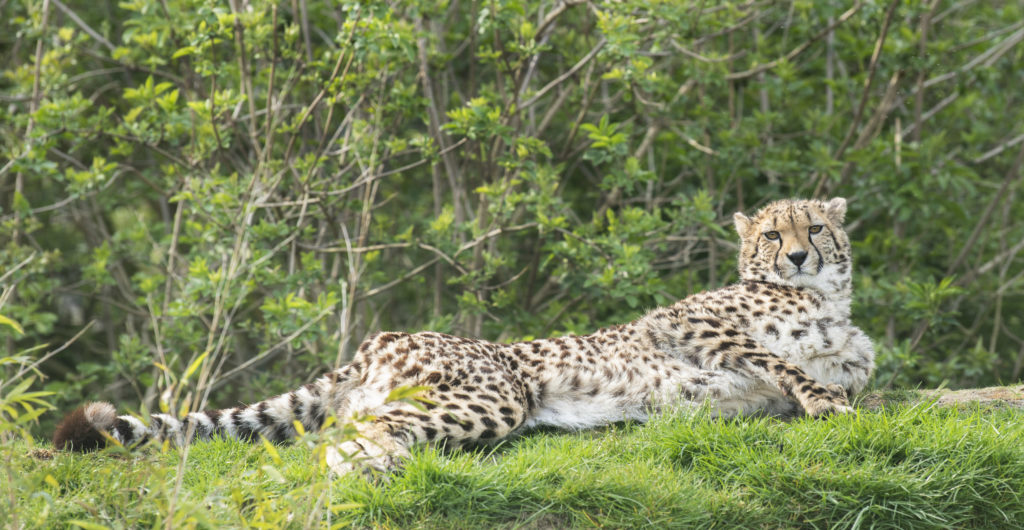
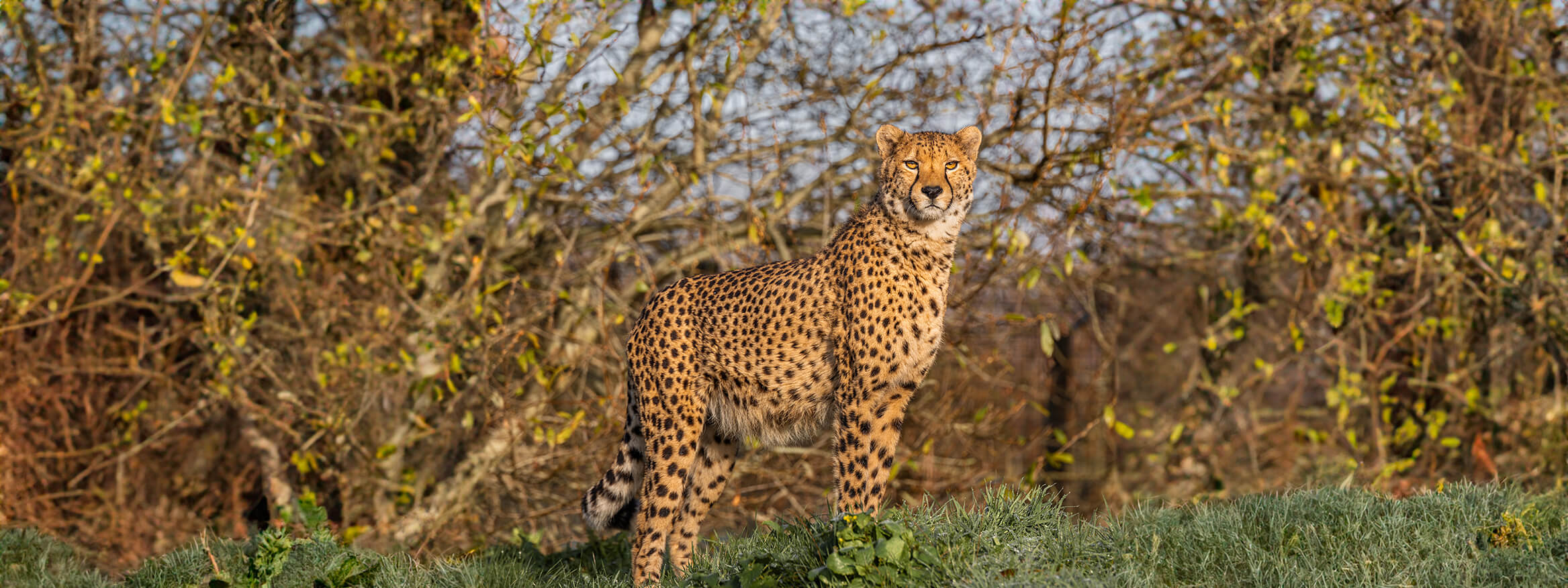
They are narrow and lightweight body with long slender limbs with a coat which is covered in single spotted markings. The distinctive tear-drop facial markings the cheetah are one of the most easily identifiable felids.
The ability to run so fast can only be maintained for a short period of time. Adaptations which help them to run at these speeds include a flexible spine and tail, which flattens at the tip to provide a counter balance for sudden changes in direction. (Acting like a rudder) Hard footpads and semi-retractable blunt claws help to grip the ground similar to how a sprinters running spikes help them to increase speed.
The future of this magnificent species remains uncertain across their range. Extinct in 25 countries and possibly extinct in a further 13 countries, cheetahs have vanished from approximately 91 percent of their historic range. They are extinct in Asia apart from a single, isolated population of perhaps 50 individuals in central Iran. Cheetahs are listed as “Vulnerable” by the IUCN.
Cheetah have larger litters of cubs than many other species, this maybe due to the high mortality rate of cubs in their habitats. Being that they are never at the top of the food chain within their range, these cats are more passive and much less likely to walk away from confrontation than to fight. These agile felines hunt during the day to avoid competition from other powerful predators such as lions, hyenas and leopards their tear marks absorb light to protect their eyes from the sun’s glare in exactly the same way as wearing a pair of shades! Cheetahs prey on rabbits, warthogs, springboks, gazelles and birds.