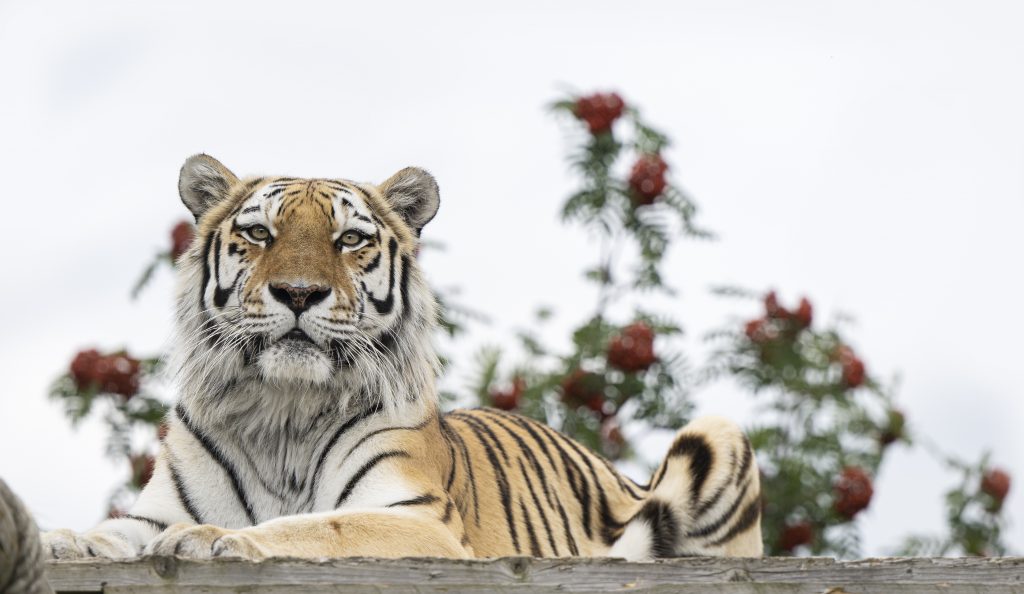
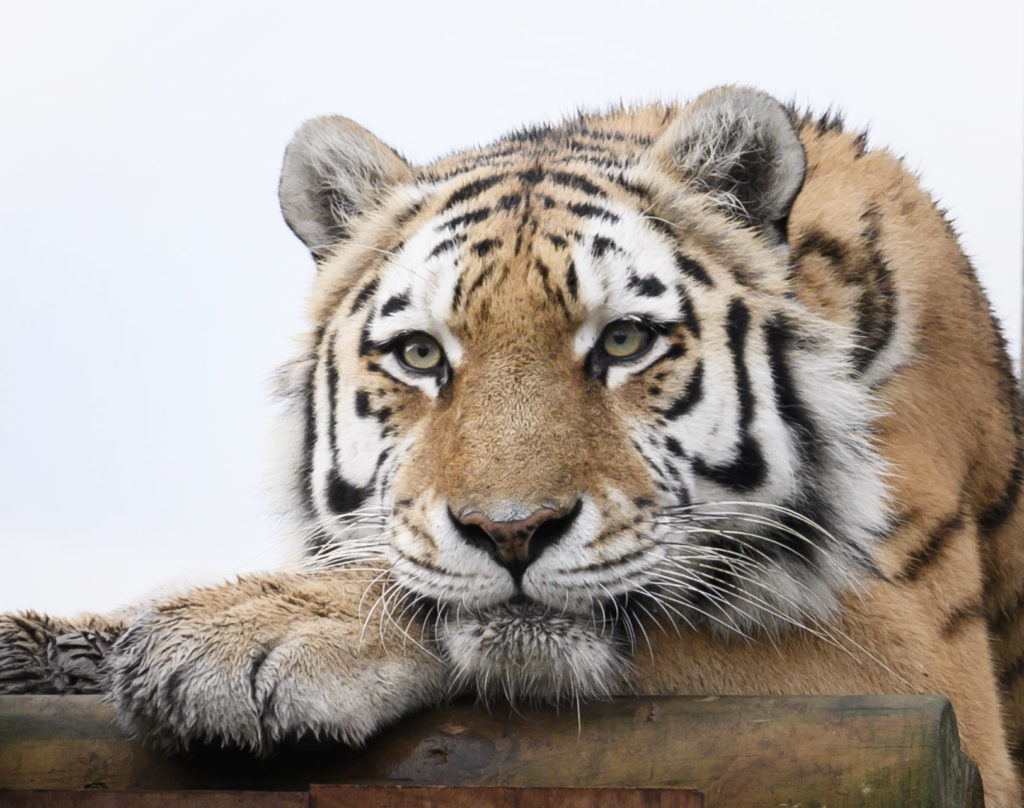
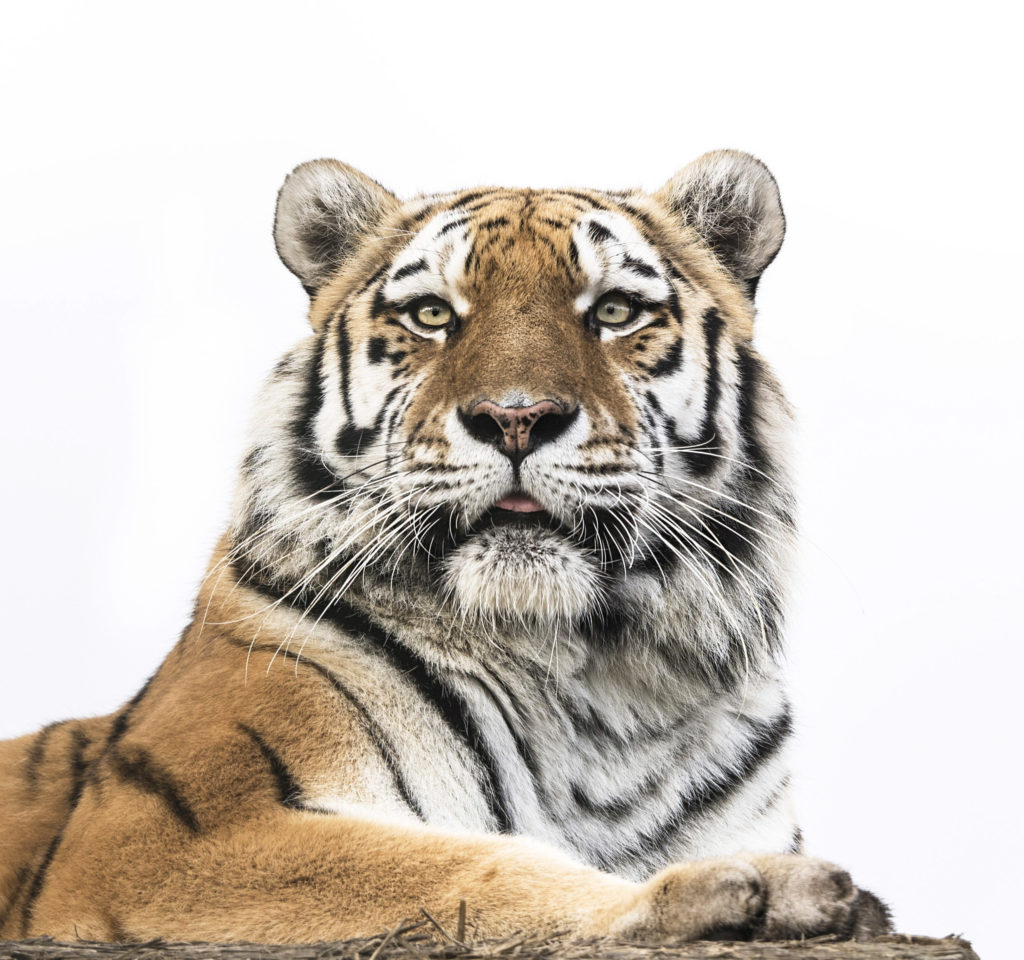
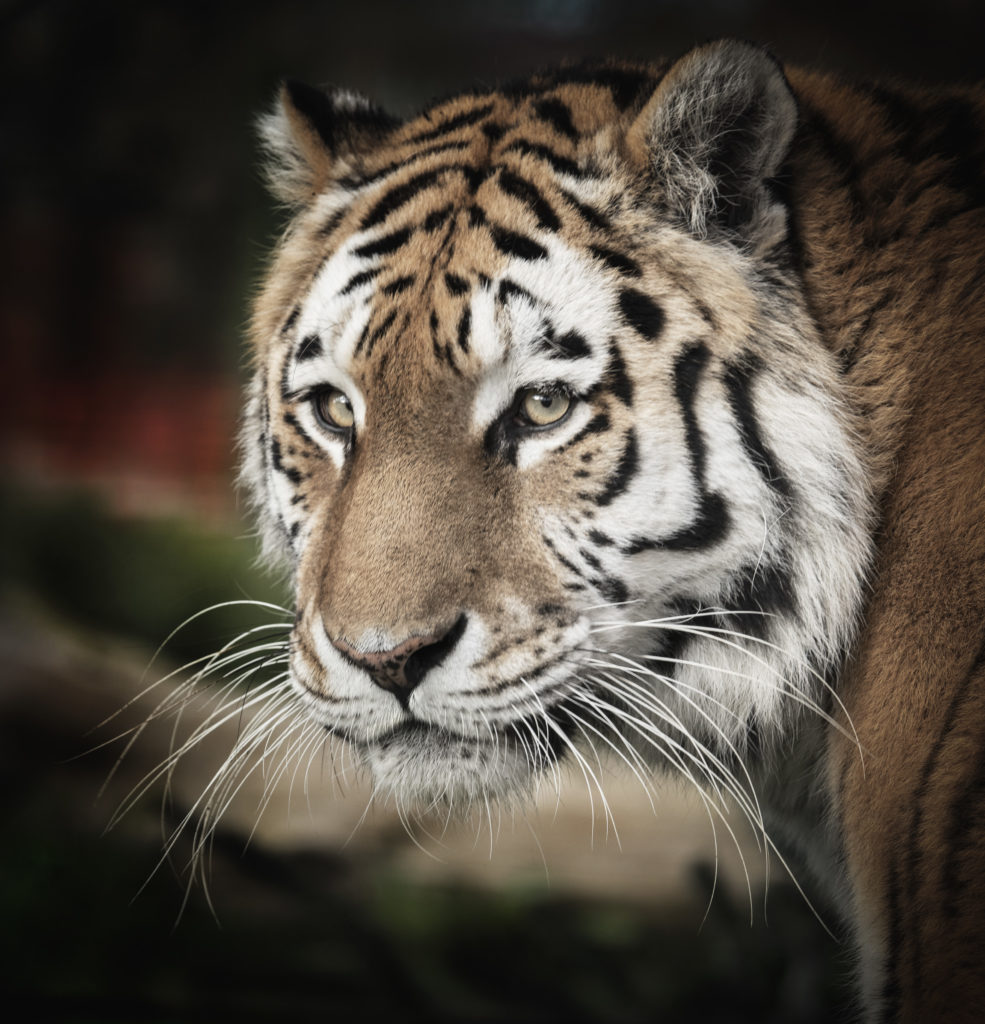
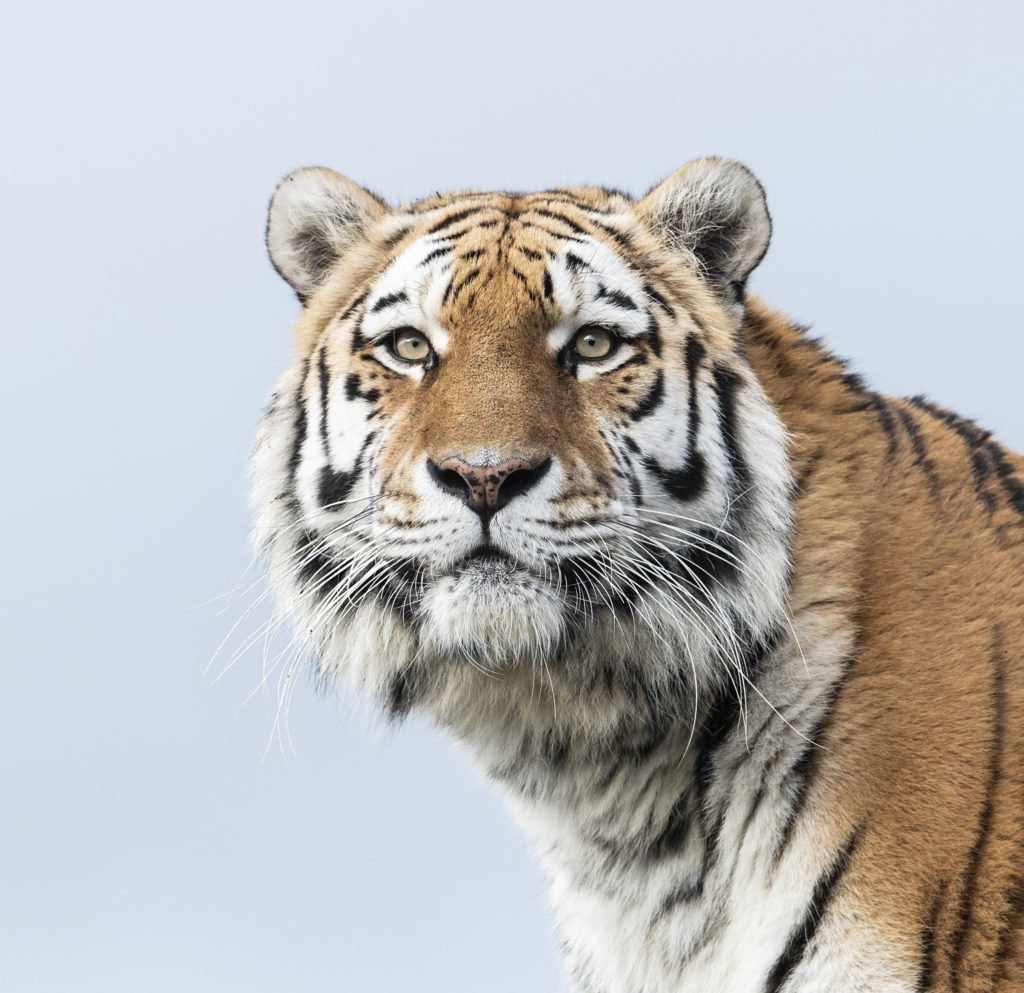
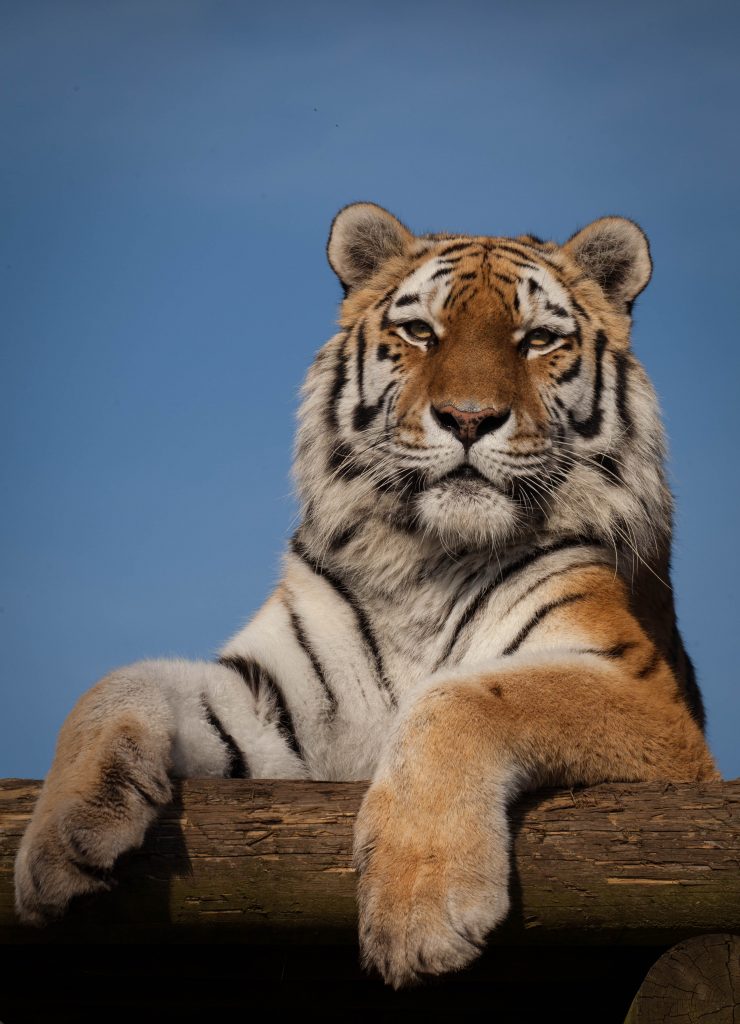
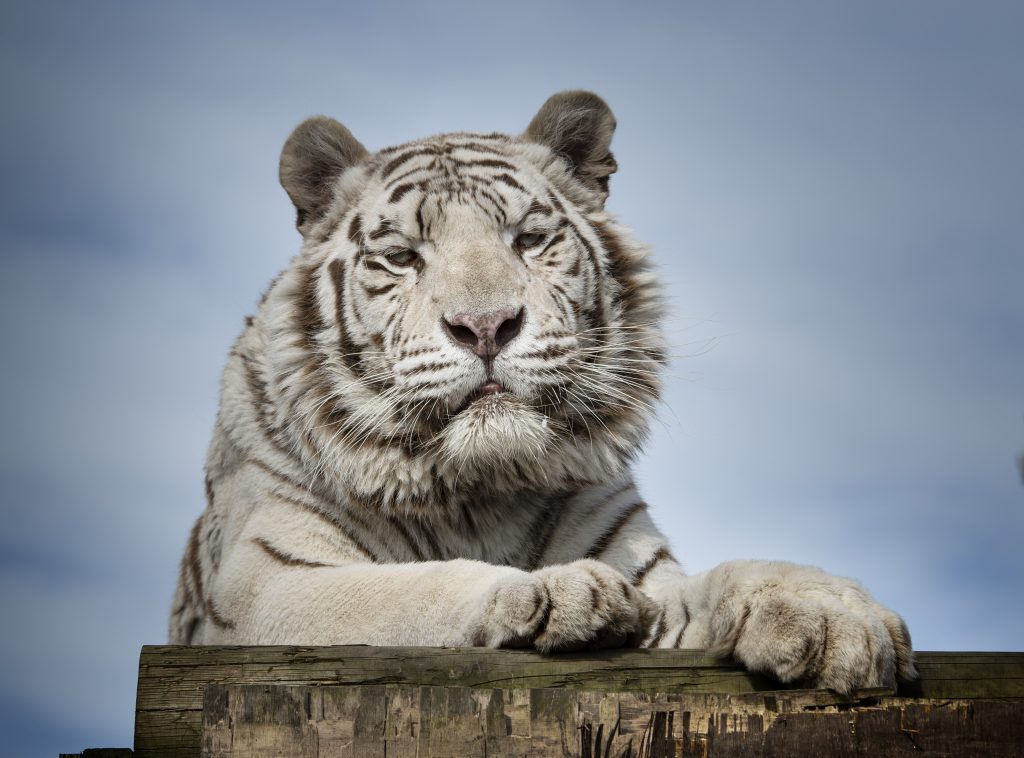
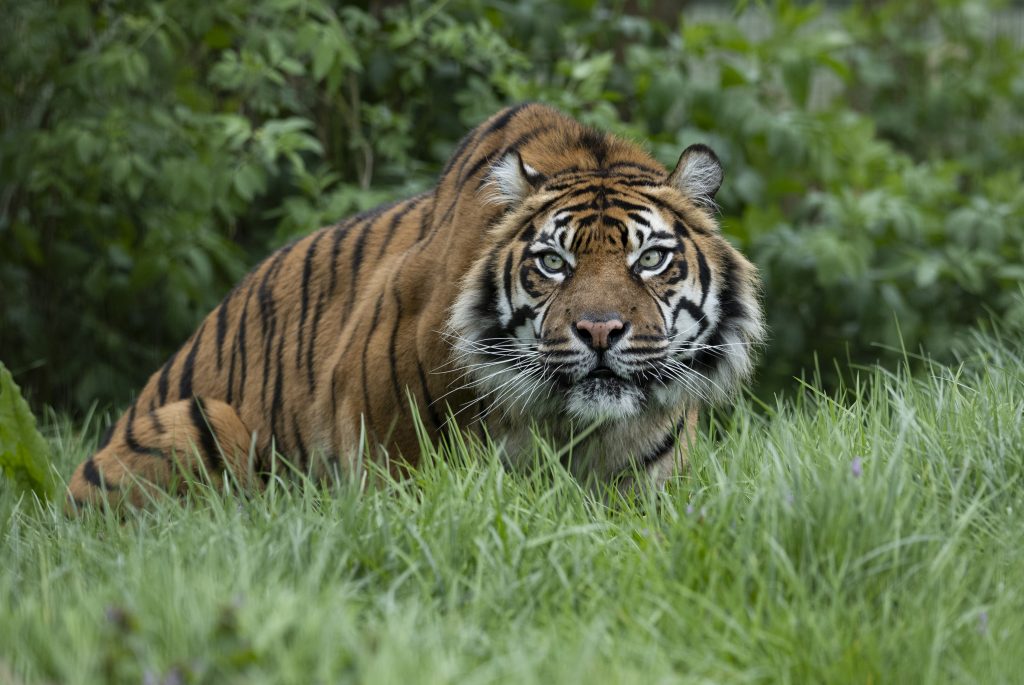
Of the five remaining sub-species, the Amur, or Siberian, tiger is the largest. The Amur tiger is also known as the Siberian tiger. They can be found in the far Eastern Russia’s Amur Valley. They are also the largest naturally occurring cat in the world. They have several distinguishing features in the coat colour and stripe pattern when compared to the other sub species. Amur tigers can live in sub-zero temperatures due to their longer, thicker fur coat.
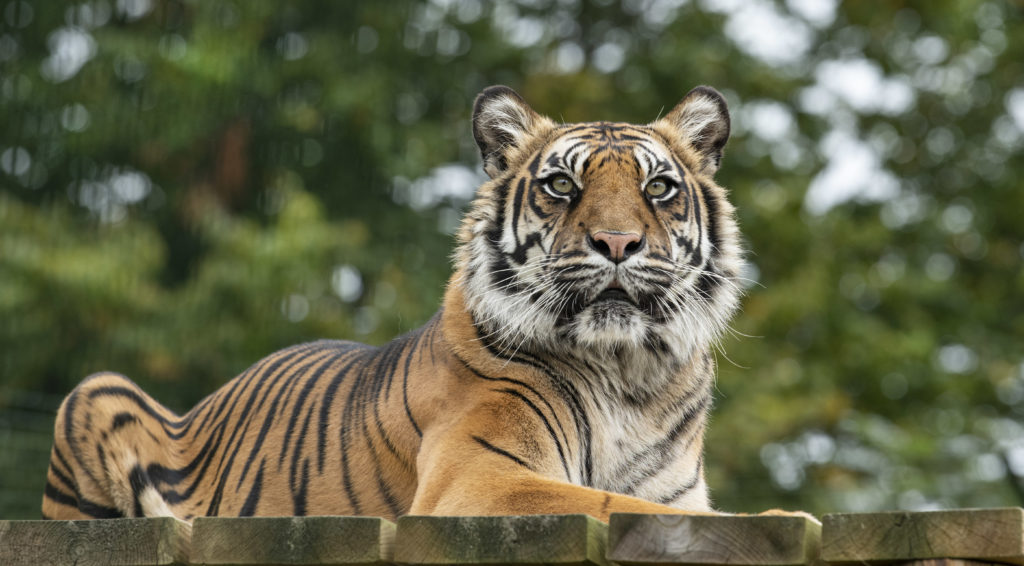
Amur tigers are typically paler in colour with a pale orange coat and comparatively wide stripes. In contrast, the Sumatran tiger is very deep orange with thin stripes that are very closely banded together. The fur is very thick and coarse, due to the extreme variation in temperature in their native range.
The Amur tiger typically inhabits pine forest, where they have an abundance of species to prey on. During times when food is scarce, Amur tigers have been known to prey upon young bears. They often attack brown bears, as they are not known climbers like the black bear, who can often escape tiger attacks using the trees.
Due to their harsh environment, there is no specific breeding season and mating may occur year round. Females in season will typically spend 5 days with a wandering male, but will only be receptive for 3 of these days. Gestation is relatively short; 3-3½ months, after which 2-4 cubs are born and solely cared for by the female. Female cubs typically spend much longer with their mother than male cubs, who will move away to find home ranges of their own.
The main threats to the wild Amur tiger population are very similar to those facing other big cat species; loss of habitat, poaching for the fur trade and the use of tiger body parts in the traditional medicine trade.