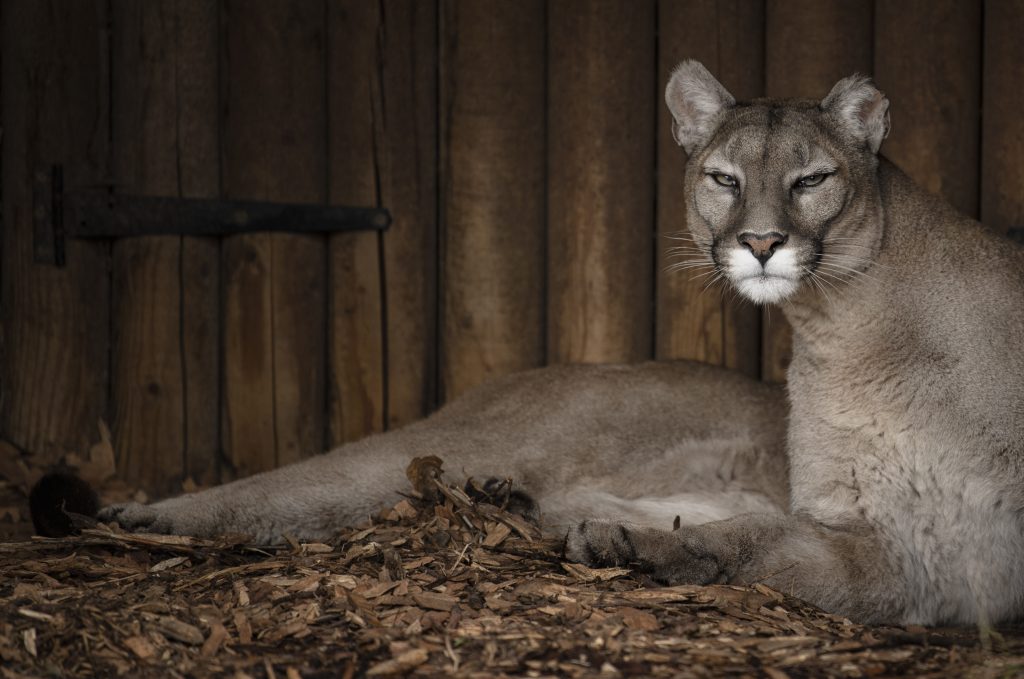
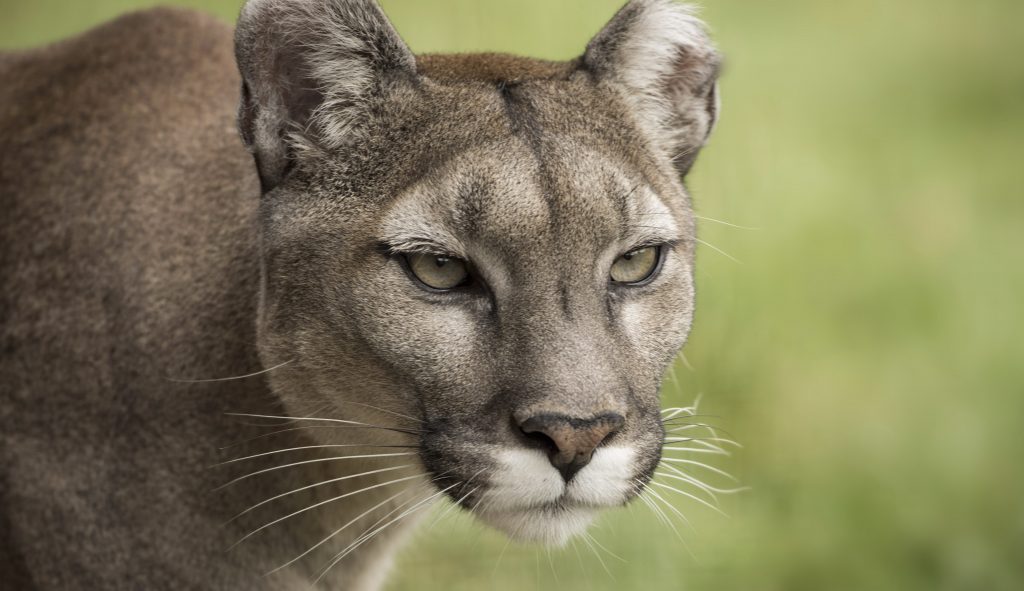
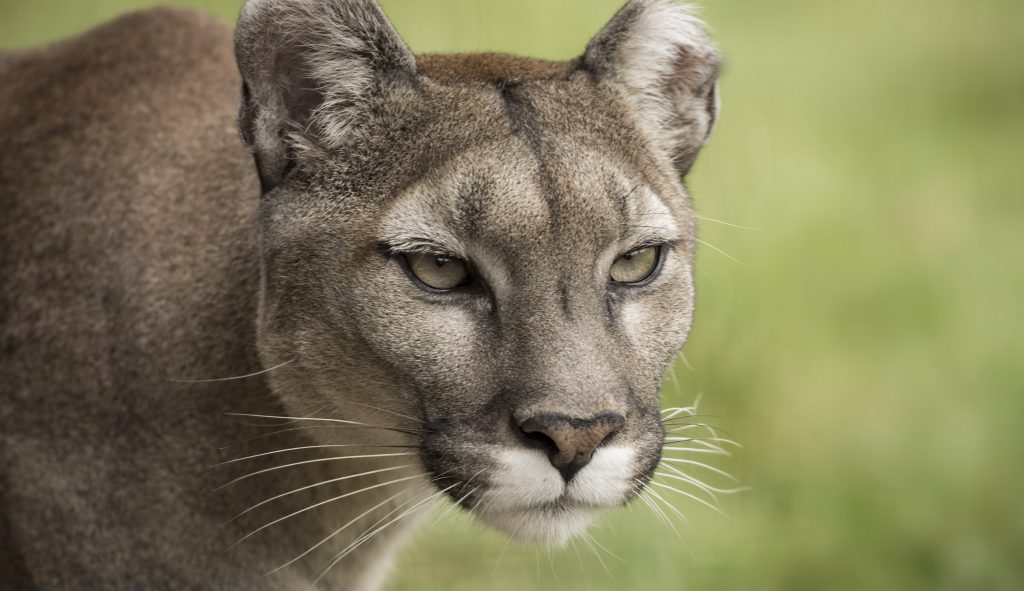
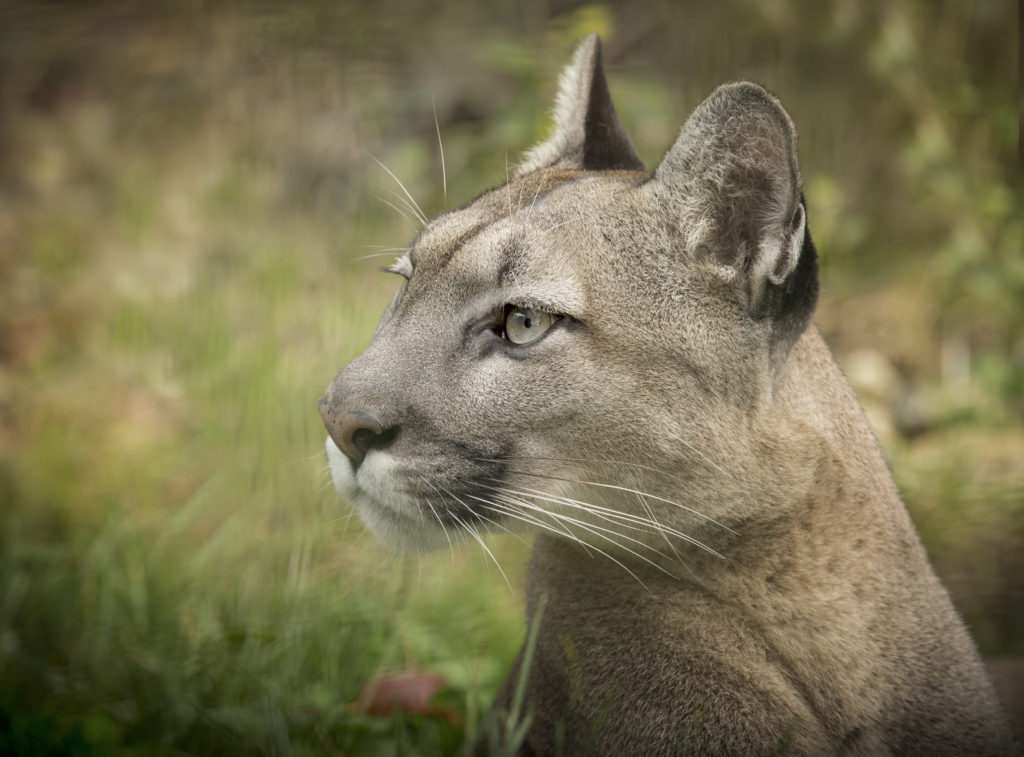
Pumas have the largest range of any cat (from Canada to South America) and have the most different common names (often called cougar, panther, mountain lion, catamount etc.).
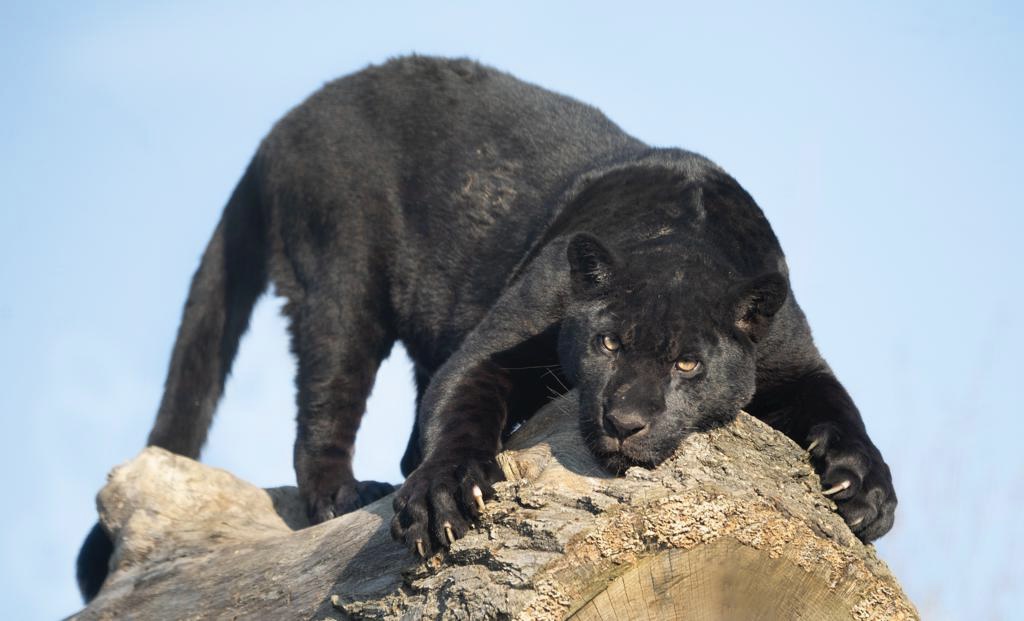
They are found in two colour phases; yellow/tawny shades of buff and cinnamon, or grey shades of silver, slate and blue. They have developed adaptations for life in the mountains including a long tail for balance, large feet for balance and weight distributions, relatively small rounded ears to prevent heat loss, and longer hind legs for agile, jumping climbing and balance. Hairs between the pads of their feet enable them to hunt and stalk relatively silently.
Over their range larger animals are found towards the far northern and southern extremes and smaller animals are equatorial. They have exceptionally powerful muscles capable of taking down very large prey; adult males are easily capable of taking adult horses.
Puma vocalise using a range of different hisses, yowls, chirrups and mews. They also frequently “scream”, the reason for this is suspected to be to attract suitable mates for breeding.
The Puma is listed as a species of “Least Concern” by the International Union for the Conservation of Nature (IUCN) Red List of Threatened Species.
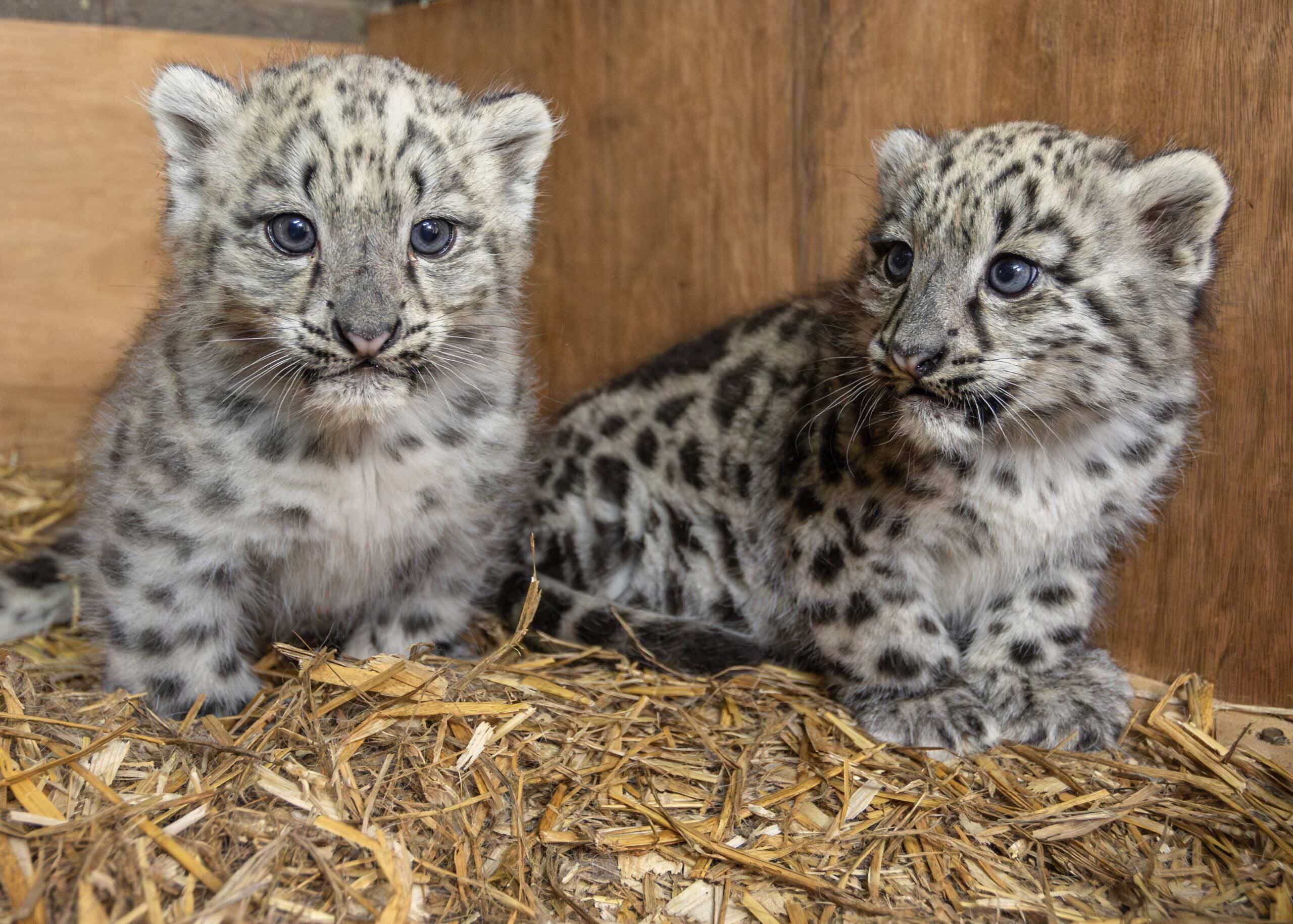
Adult Puma are solitary except when mating/rearing kittens. Offspring are mainly born year-round after a gestation period of 90 – 96 days. However puma become more seasonal breeders the further north (most kittens being born April – September) and south (birth peak from February – June) in their ranges. Average litter sizes are 1 -6 blind, helpless and spotted kittens. Kittens grow quickly, open their eyes at approximately 7 days, start to eat meat at approximately 6-8 weeks, are fully weaned at 12 weeks but may continue to suckle for as long as the mother allows. The spots start to fade at approximately 6 months, when juveniles start making their own kills.
Dispersing age is approximately 12-18 months at sexual maturity however puma will not start breeding until they have established their own territories; males usually at 3 years and females at 2.5 years.
Pumas are increasingly threatened by habitat loss and fragmentation due to human development of land. Human-puma conflict, including retaliatory and pre emptive killing, is a primary threat to pumas and is exacerbated by old mythology perpetuating the fear of pumas. In some parts of the Americas, puma prey populations are depleted due to over-hunting by humans as well as loss of habitat. Legal and illegal hunting, including bounty hunting and poaching, poses a significant threat to pumas throughout their range.