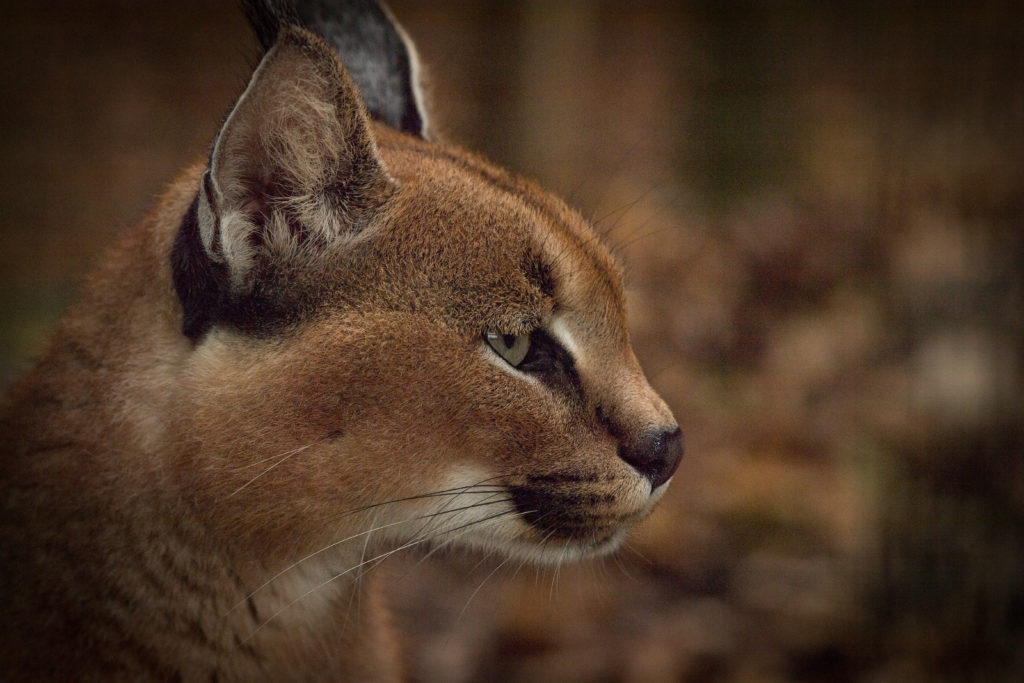
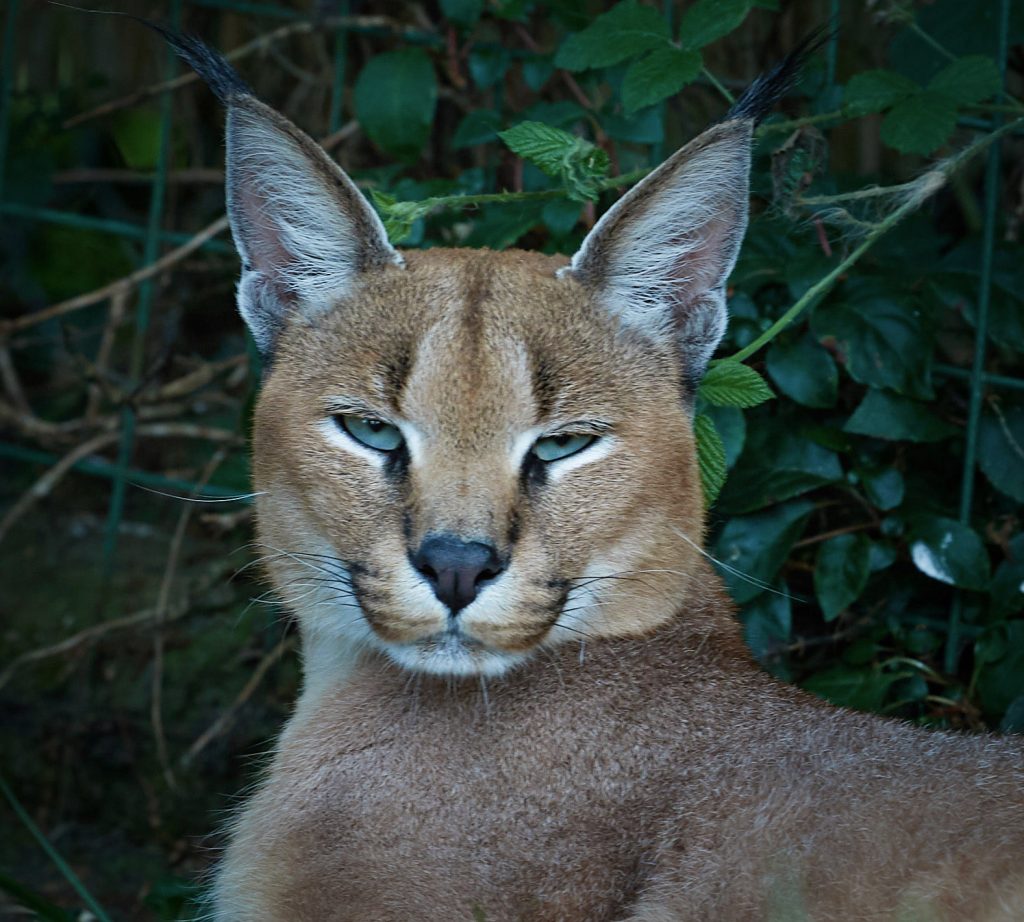
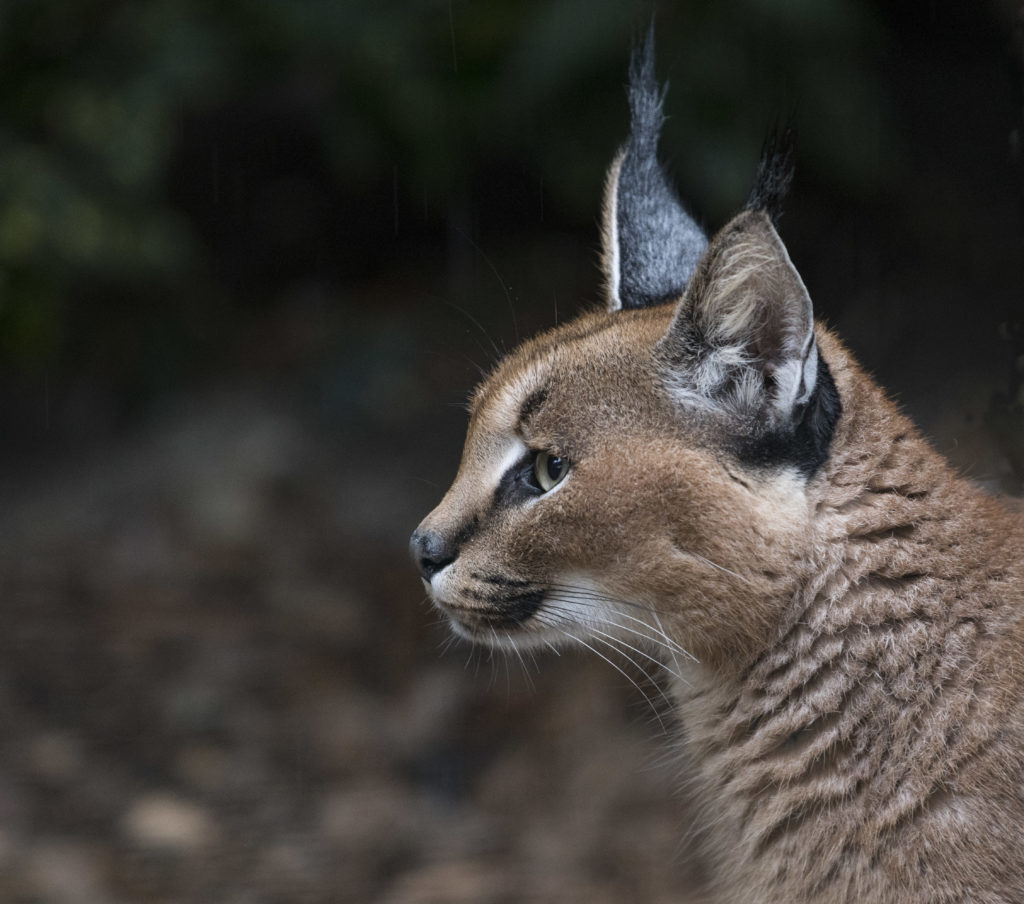
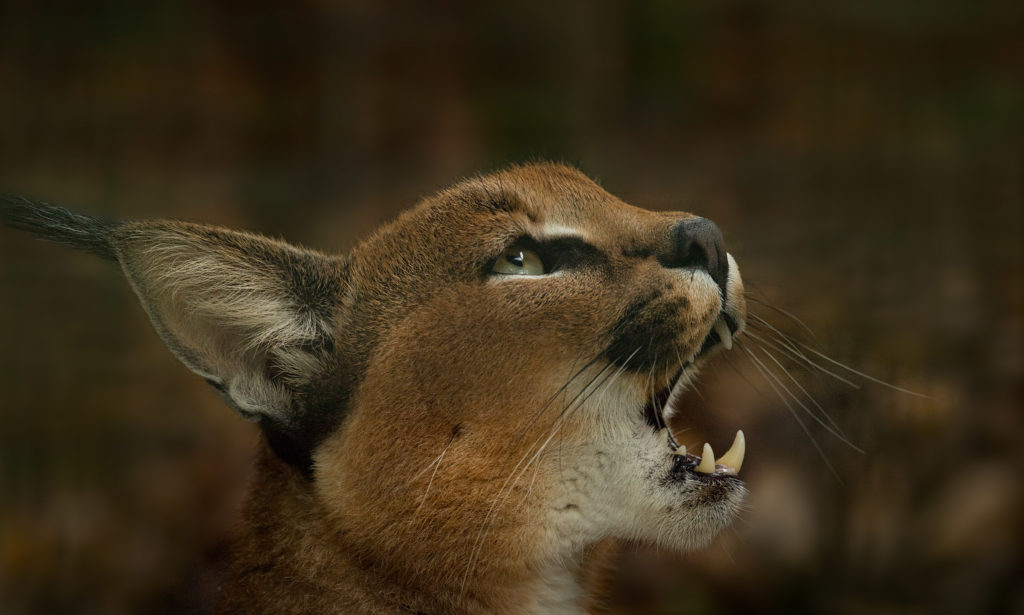
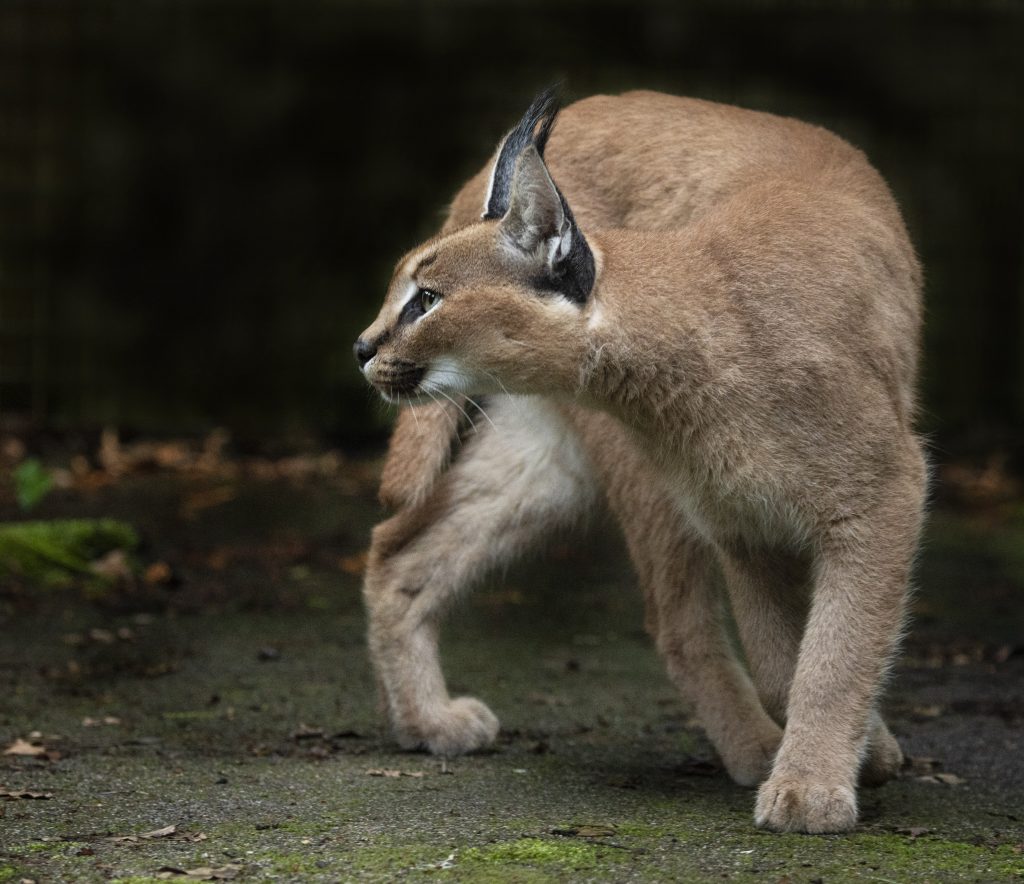
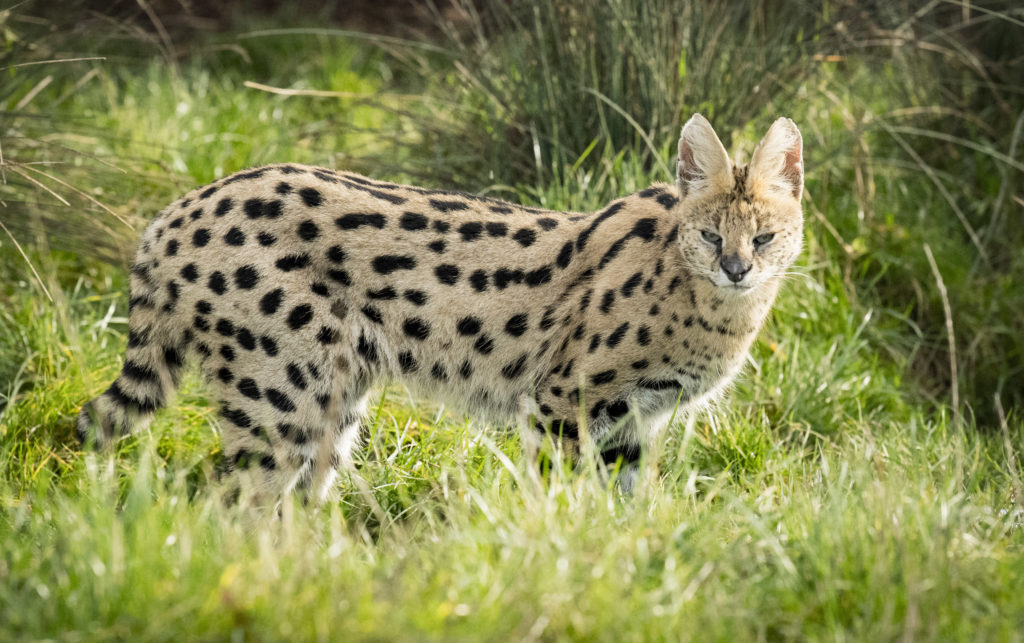
The Caracal is a cat of medium size and build, one of the largest species belonging to the small cat family. Their closest relative being the Serval, they have a robust and muscular build as opposed to the slight and lengthy physique of the Serval. They also occupy very different habitats within Africa. The Caracal thrives in the drier, sandy areas of Africa and the Middle East, their stunningly shiny, short, red coat helps with protection, offering excellent camouflage. Often referred to as the African, or Desert lynx, they have a much lighter frame and body size to the true lynx.
A feature they share with the lynx is that of long ear tufts or tassels. Despite many theories to their true use, it is still unknown exactly what they are used for. Some of these theories include: to assist in camouflage by helping to break up the silhouette of the cats face, being used to keep flies out of the face and assisting in hunting accuracy.
They are the largest of the small cats found in Africa and as such are quite successful in the wild, with a distribution that includes over ¾ of Africa.
The Caracal is listed as Least Concern by the IUCN Red List and in the Red List of South Africa, Swaziland and Lesotho. It is classified as Threatened in North Africa and as Critically Endangered in Morocco. In Egypt it they are considered to be rare.
As with the majority of the cat species, the Caracal is a solitary animal, only interacting with others for mating purposes. There is no set breeding season so kittens can be born throughout the year following a gestation period of only 2 ½ months. Litter size can be as large as six with the male taking no part in the care of the young. By 10 weeks of age the kittens are fully weaned and typically stay with their mother until about a year old.
Sexual maturity is reached by 16-18 months old. With such success breeding and hunting they are sometimes regarded as a potential nuisance to farmers with livestock, which can prompt retaliation killings. In Namibia and South Africa in particular landowners are permitted to legally hunt them without restriction. However hunting within sub-Saharan Africa is forbidden, once again what is needed is the ability to co-exist with wildlife. Education is key to the future survival of species such as these.
Research and studies on many of these small cats species is so limited, no-one really knows enough to be able to paint a comprehensive picture of them and their lives. We are learning more and more as time goes on, but we do know some of these smaller animals are fascinating and have very specific and incredible survival skills.